
Launching a great game is only half the battle. In today's highly competitive gaming market, visibility has become one of the biggest challenges facing developers. Thousands of new games launch every year across Steam, PlayStation, Xbox, Nintendo Switch, mobile app stores, and emerging cloud gaming platforms, making discoverability harder than ever.
Learning how to promote a game on social media has become one of the most important skills in modern game marketing. Social platforms now influence nearly every stage of the player journey from discovery and wishlisting to community engagement and long-term retention.
The opportunity is massive. Steam surpassed 40 million concurrent users in 2025, highlighting the continued growth of PC gaming audiences worldwide. Meanwhile, Newzoo's PC & Console Gaming forecasts project the global PC and console software market will exceed $103 billion by 2028, with PC gaming expected to outgrow consoles thanks to strong growth across Asia and emerging markets.
Social media is becoming increasingly important as traditional discovery channels become more crowded. Creator-driven discovery, community engagement, livestreaming, and short-form video now play a major role in how players find and engage with games. Platforms such as TikTok, YouTube, Twitch, Discord, Reddit, Bilibili, and Douyin are reshaping the modern gaming marketing funnel.
At Asia Game Buzz, we've seen one trend repeatedly across successful launches in both Western and Asian markets: games that consistently engage their communities through social media often outperform games that rely solely on paid advertising.
This guide explores practical strategies for social media marketing for video games, helping developers build awareness, grow communities, and create sustainable player engagement.
Why Social Media Is Essential for Game Promotion
How Gamers Discover New Games Today
Gaming discovery has fundamentally changed. Players no longer rely exclusively on gaming websites, magazines, retail stores, or platform recommendations. Today, players discover games through:
- Social media platforms
- Content creators and streamers
- Gaming communities
- User-generated content (UGC)
- Online reviews
- Livestreams and esports events
A single gameplay clip can generate millions of views overnight, while community discussions often influence purchasing decisions more than traditional advertising.
For example, Reddit has become one of the most influential discovery platforms for PC and indie games. Communities such as r/gaming, r/IndieGaming, r/pcgaming, and genre-specific subreddits frequently drive significant traffic to Steam pages, demos, and launch announcements. Many successful indie developers now treat Reddit as both a marketing channel and a player feedback platform.
Steam Next Fest has further amplified the importance of social media. Developers who actively engage with players, streamers, and community discussions during the event often see substantial increases in demo downloads and wishlist growth.
Social media has become one of the most cost-effective ways to reach players directly and build awareness before launch.
The Role of Social Media in the Game Launch Funnel
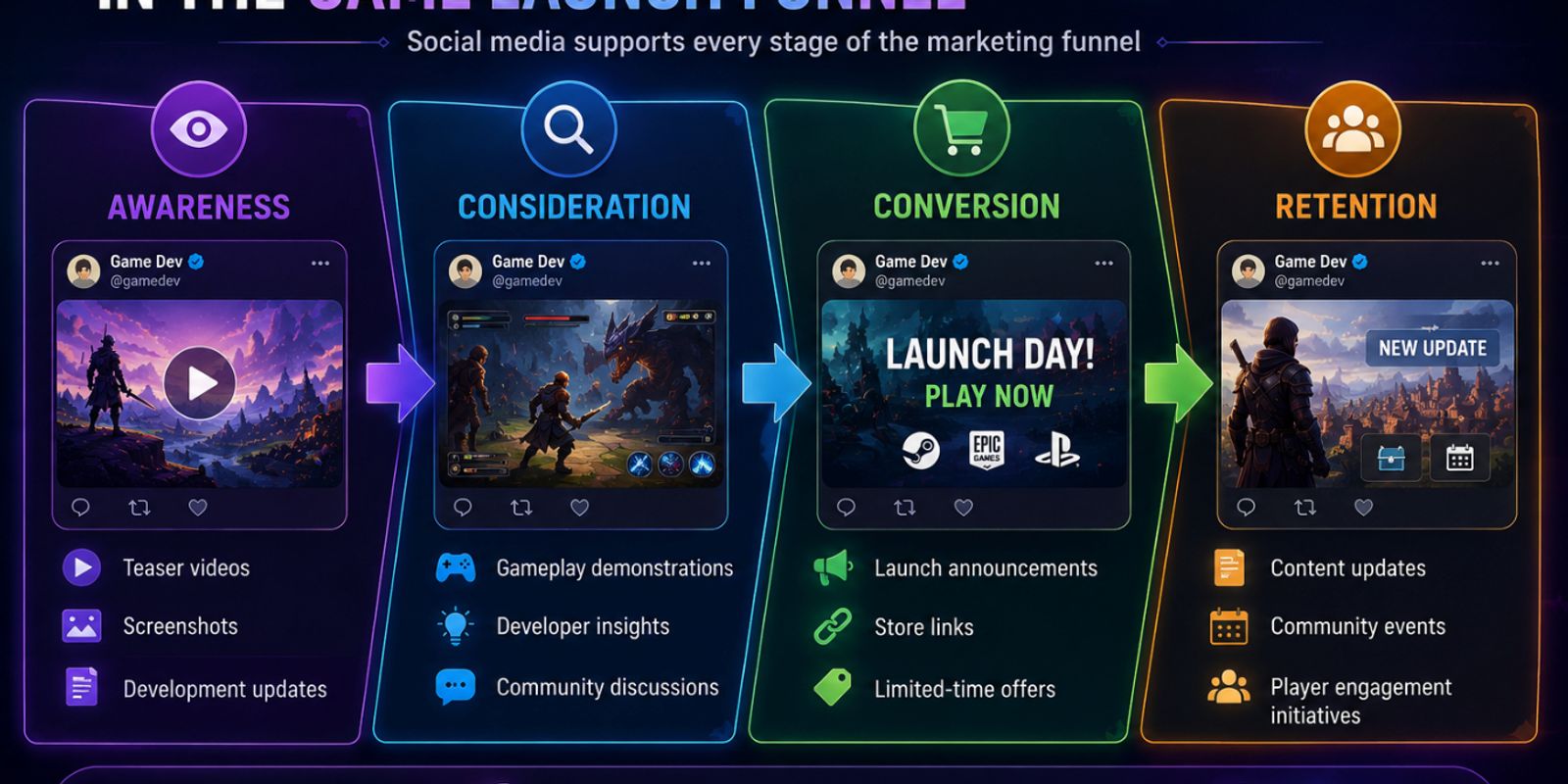
Social media supports every stage of the marketing funnel:
Awareness
- Teaser videos
- Screenshots
- Development updates
Consideration
- Gameplay demonstrations
- Developer insights
- Community discussions
Conversion
- Launch announcements
- Store links
- Limited time offers
Retention
- Content updates
- Community events
- Player engagement initiatives
The most successful studios treat social media as an ongoing communication channel rather than a one-time promotional tool.
Choosing the Right Platforms for Your Game
Not every platform serves the same purpose. Choosing the right channels depends on your game's genre, audience, and marketing goals.
Twitter/X for Game Dev Updates and Community
X remains a valuable platform for developers looking to connect with players, journalists, creators, and industry professionals. Popular content includes:
- Development progress updates
- GIFs and gameplay snippets
- Industry discussions
- Launch announcements
- Community interactions
Many indie developers have successfully built audiences by consistently sharing development milestones and engaging with players directly.
For developers interested in how to get into video game marketing, X also remains one of the best places to follow publishers, PR professionals, journalists, and marketing experts.
TikTok and Instagram Reels for Viral Game Clips
Short-form video has become one of the most powerful tools for game discovery.
TikTok and Instagram Reels are ideal for:
- Gameplay highlights
- Funny moments
- Boss battles
- Character reveals
- Before-and-after development clips
Short, engaging videos often outperform polished promotional content because they feel authentic, entertaining, and highly shareable.
Many indie games have generated millions of organic views from a single gameplay mechanic, bug, or surprising interaction. For developers researching how to promote a game on social media, short-form video should be a core component of any strategy.
YouTube for Trailers, Devlogs, and Gameplay
YouTube remains one of the most influential gaming platforms globally. Developers can leverage YouTube through:
- Cinematic trailers
- Gameplay showcases
- Devlogs
- Feature deep dives
- Livestreams
- Tutorials
- Behind-the-scenes content
Unlike TikTok, YouTube provides long-term search visibility and evergreen discoverability. Many players discover games months—or even years—after a video is published.
A well-optimized YouTube strategy can continue driving wishlists and traffic long after launch.
Discord for Community Building
Discord has become the central hub for many gaming communities. A well-managed Discord server can help developers:
- Gather player feedback
- Share updates directly
- Organize community events
- Build brand loyalty
- Create early-access programs
- Recruit playtesters
For many indie studios, Discord functions as both a marketing platform and a customer relationship tool.
This is where gaming community management becomes especially important. A highly engaged Discord community can become a powerful source of user-generated content, bug reports, player retention, and word-of-mouth marketing.
Reddit and Gaming Forums for Organic Discovery
Beyond Discord, forums and community platforms remain highly valuable for developers looking to build authentic visibility.
Popular channels include Reddit, Steam Community Hubs, ResetEra, IndieDB, Game Jolt and official game forums.
Benefits include:
- Direct player feedback
- Organic discovery
- Playtesting recruitment
- Community discussions
- Early supporter acquisition
Many indie games gain their first meaningful traction through community conversations long before launch.
Unlike paid advertising, forum engagement often creates highly engaged early adopters who become long-term advocates.
Asian Platforms: Bilibili, WeChat, and Weibo
Developers targeting Asian markets should consider regional social platforms.
Popular channels include:
- Bilibili for gaming content and creator engagement
- WeChat for community building and content distribution
- Weibo for public discussions and announcements
- Douyin for short-form video
- Huya and DouYu for livestreaming
Gaming discovery in China often revolves around creator communities, livestream ecosystems, and platform-specific content formats.
Unlike Western markets, many Chinese gaming campaigns integrate short-form video, livestreaming, community engagement, and social commerce simultaneously.
Localization is essential. Content that performs well on Western platforms often requires adaptation to resonate with audiences in China and other Asian markets.
Social Media Marketing for Video Games: Core Strategies
Creating a Content Calendar Before Launch
One of the biggest mistakes developers make is waiting until launch to begin marketing.
A content calendar helps organize messaging across different stages of development.
Typical content categories include:
- Teaser content
- Character reveals
- Gameplay footage
- Development milestones
- Community spotlights
- Launch countdowns
- Gameplay reveals
- Wishlist campaigns
- Creator outreach
- Demo announcements
Many successful Steam games begin publishing content 6–12 months before release.
Planning content in advance ensures consistency and helps maintain audience interest over time.
Behind-the-Scenes and Dev Diary Content
Players increasingly want to understand the people behind the games they play.
Behind-the-scenes content can include:
- Concept art
- Animation processes
- Development challenges
- Team introductions
- Feature creation stories
- Technical breakdowns
Developer diaries humanize the studio and help build stronger emotional connections with players.
This type of content often performs particularly well among indie game audiences because it creates transparency and authenticity.
User-Generated Content and Fan Engagement
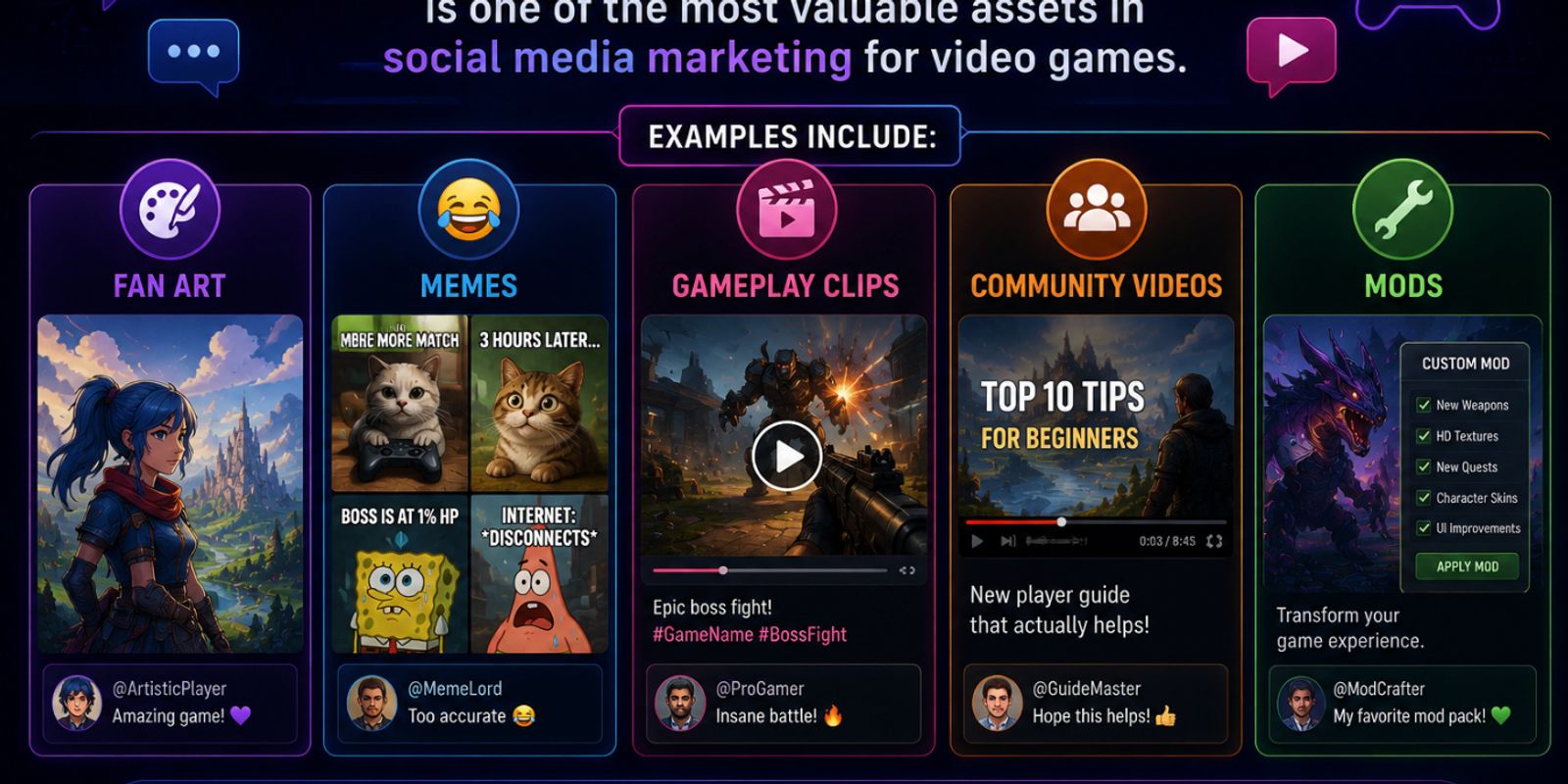
User-generated content (UGC) is one of the most valuable assets in social media marketing for video games.
Examples include:
- Fan art
- Memes
- Gameplay clips
- Community videos
- Mods
Encouraging and showcasing player-created content helps expand reach organically while strengthening community involvement.
User-Generated Content and Fan Engagement
Examples of Successful UGC Ecosystems
Minecraft is one of the strongest examples of a user-generated content ecosystem. Its long-term success has been fueled by community-created mods, custom servers, tutorials, and millions of YouTube videos. Players continuously create new experiences and content, helping Minecraft remain relevant and discoverable for over a decade.
Among Us demonstrates how community-driven content can transform a game into a global phenomenon. Streamer clips, memes, social media discussions, and creator collaborations generated massive organic exposure during its peak popularity. Much of the game's growth came from players sharing experiences rather than traditional advertising.
These games demonstrate how player-created content can become a powerful growth engine beyond traditional advertising.
Social Media Marketing for Mobile Games
Short-Form Video Content for Mobile Game Promotion
Mobile games naturally fit short-form content consumption. High-performing mobile content often highlights:
- Quick gameplay loops
- Satisfying mechanics
- Character abilities
- Progression showcases
- Challenge videos
Successful social media marketing for mobile games often focuses on visually engaging moments that immediately capture attention.
Recent industry research shows that a growing share of mobile gamers now discover games through short-form video platforms rather than traditional banner advertising. Platforms such as TikTok, Douyin, Instagram Reels, and Kuaishou continue gaining importance as primary discovery channels.
Paid Social Ads for Mobile Game User Acquisition
Organic reach remains valuable, but paid acquisition continues to play a major role. Common formats include:
- TikTok ads
- Instagram ads
- Facebook ads
- YouTube Shorts ads
- Playable ads
Recent industry reports show publishers increasingly shifting away from pure install-volume campaigns toward retention-focused acquisition strategies that prioritize player quality and lifetime value (LTV).
Playable ads have become particularly effective because they allow players to experience gameplay before downloading, often improving conversion quality and retention rates.
Gaming Community Management on Social Media
How to Build and Manage an Engaged Gaming Community
Strong communities do not happen automatically. Effective gaming community management requires:
- Consistent communication
- Active moderation
- Transparent updates
- Recognition of player contributions
- Meaningful engagement
Simple activities such as polls, developer Q&As, contests, feedback discussions, and community challenges can dramatically increase engagement.
Developers should also identify and support their most passionate community members, who often become volunteer advocates and ambassadors for the game.
Handling Negative Feedback and Community Crises
Every game receives criticism at some point.
How developers respond often matters more than the issue itself.
Best practices include:
- Acknowledging concerns quickly
- Communicating transparently
- Avoiding defensive responses
- Providing regular updates
- Following through on commitments
Trust is one of the most valuable assets in community management, and transparency helps preserve it during difficult situations.
Measuring Your Social Media Game Marketing Performance
Key Metrics to Track
Tracking performance helps developers understand what content resonates with players.
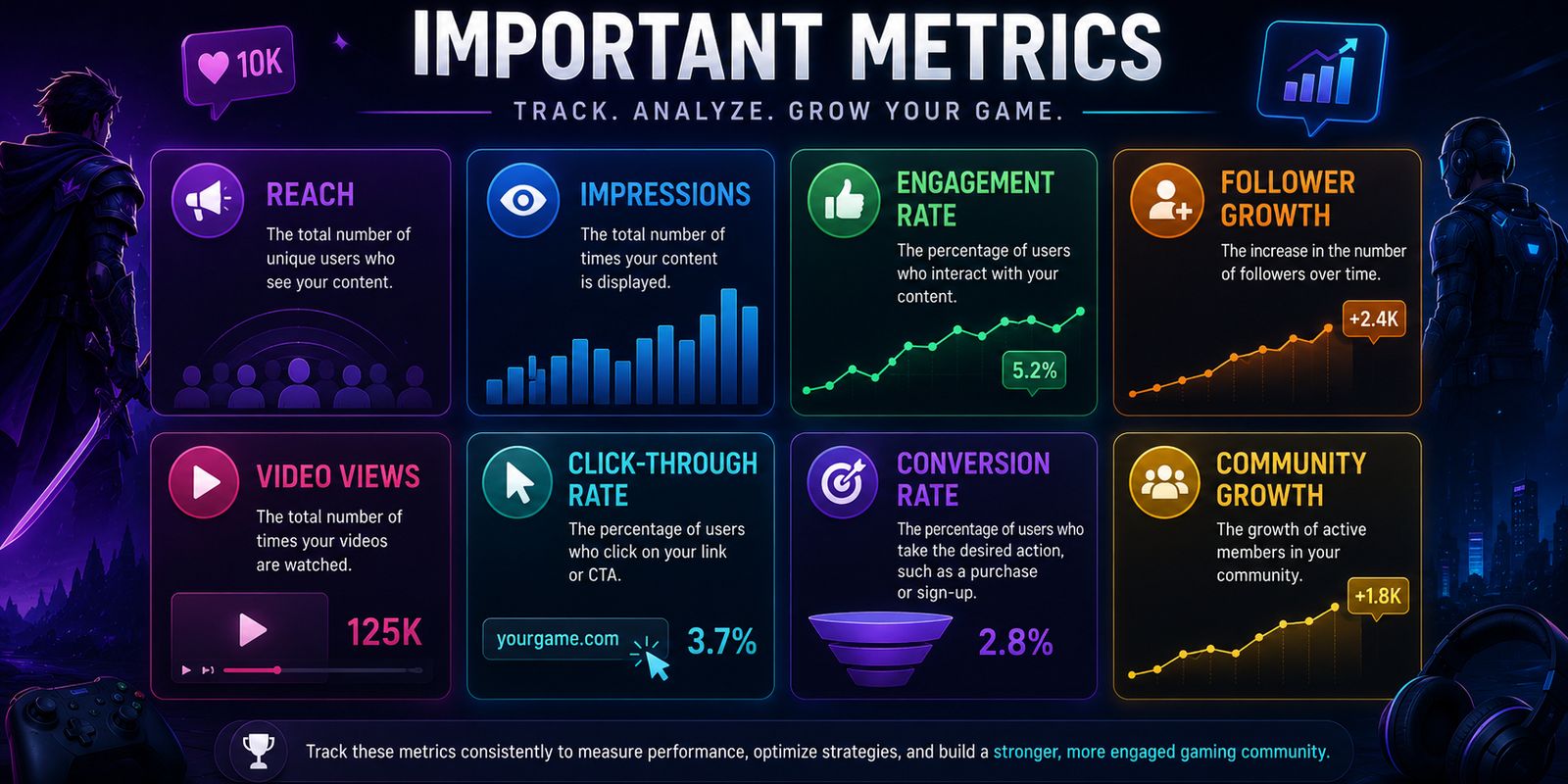
Important metrics include:
- Reach
- Impressions
- Engagement rate
- Follower growth
- Video views
- Click-through rate (CTR)
- Conversion rate
- Community growth
Rather than focusing solely on follower counts, developers should prioritize meaningful engagement and player retention.
Tools to Monitor Your Campaigns
Several tools can help measure campaign effectiveness:
- Native platform analytics
- Google Analytics
- Steamworks Analytics
- Discord Insights
- Hootsuite
- Sprout Social
- Brandwatch
- Meltwater
- Coverage Bot
- Social listening platforms
For Chinese platforms, marketers also monitor Heat Index scores, which measure livestream engagement through watch time, gifting behavior, interaction quality, and community activity.
Regular analysis allows teams to optimize content strategies, identify high-performing content formats, and allocate resources more effectively.
Conclusion: Social Media Is Your Most Powerful Game Marketing Tool
Understanding how to promote a game on social media is no longer optional for modern developers.
Today's players discover games through creators, communities, short-form video, livestreams, and social conversations far more often than through traditional advertising alone.
Successful social media marketing for video games combines:
- Consistent content creation
- Gaming community management
- Creator collaborations
- User-generated content
- Platform-specific strategies
- Data-driven optimization
Whether you're launching an indie Steam title, scaling a mobile game, or preparing a global release, social media provides one of the most cost-effective ways to build awareness and connect directly with players.
At Asia Game Buzz, we've found that the most successful game launches aren't built around a single viral post. They're built through ongoing relationships with players, creators, and communities.
The future of video game marketing and PR is increasingly community-driven. For developers wondering what is video game marketing and PR, the answer is becoming clearer every year: it's about building meaningful connections with players long before launch and maintaining those relationships long after release.
The studios that consistently invest in community, content, and creator relationships will be the ones that stand out in an increasingly crowded gaming marketplace.