In 2026, indie game discovery is increasingly driven by creators rather than traditional advertising. From our direct experience supporting launches across Western and Asian gaming markets, we’ve seen studios shift budgets away from banner ads and toward scalable creator ecosystems that drive measurable Steam wishlist growth. Jestr vs influencer agencies has become one of the most important strategic decisions for indie developers trying to balance campaign speed, creator quality, budget efficiency, and long-term scalability.
This shift is happening for a reason. Steam has become more competitive than ever. Recent market data shows nearly 20,000 games launched on Steam in 2025 alone, while thousands of titles struggled to gain meaningful visibility or player reviews.
At the same time, the creator economy continues expanding rapidly. Industry reports published in 2025 estimate global influencer marketing spend reached more than $32 billion, with gaming remaining one of the fastest-growing creator verticals.
For modern game launches, creator-led discovery is no longer optional it has become central to visibility.
What Is Jestr?
Overview of the Platform
Jestr is a gaming marketing platform designed to connect game developers directly with creators through scalable influencer campaigns.
Unlike traditional gaming influencer agencies that rely heavily on managed outreach and account services, Jestr operates more like a creator marketplace specifically built for games. Developers can:
- launch creator campaigns directly,
- distribute Steam keys,
- recruit creators by genre,
- promote demos and early-access launches,
- and scale gameplay-focused content rapidly.
The platform reflects a broader industry trend: players increasingly discover games through creators instead of traditional gaming websites or display advertising.
Today’s gaming creator marketing ecosystem revolves around:
- TikTok gameplay clips,
- YouTube Shorts,
- Twitch livestream moments,
- meme-driven gameplay,
- creator recommendations,
- and short-form social discovery.
For indie studios competing inside a crowded marketplace, this creator-first discovery model has become extremely valuable.
Self-Serve Creator Marketplace Model
One of the biggest differences between Jestr and traditional agencies is the self-serve structure.
Developers can:
- launch creator campaigns directly,
- onboard creators quickly,
- track creator engagement,
- monitor wishlist traffic,
- and scale campaigns based on performance.
Instead of manually contacting dozens of creators, studios can centralize game influencer campaigns within one platform.
This makes Jestr particularly attractive for:
- indie developers,
- smaller publishers,
- early-stage launches,
- and budget-sensitive marketing campaigns.
From our campaign observations, this flexibility allows smaller studios to test multiple creator strategies without committing to large agency retainers.
How Traditional Gaming Influencer Agencies Work
Traditional gaming influencer agencies operate very differently.
Rather than functioning as self-service creator marketplaces, agencies typically provide fully managed campaign services designed for larger launches and publisher-level marketing operations.
Managed Campaign Services
Agencies typically handle:
- Campaign planning
- Creator negotiations
- Contracts and legal approvals
- Reporting
- Paid amplification
- Multi-platform strategy
This model is designed for publishers that need large-scale coordination and hands-on support.
For major launches, agencies often integrate influencer campaigns into broader PR and media strategies.
Creator Outreach
Traditional agencies maintain direct relationships with:
- macro influencers,
- esports personalities,
- Twitch streamers,
- YouTube gaming creators,
- and celebrity gaming influencers.
These relationships can provide access to creators who may not participate actively in open marketplaces.
Agencies also manage:
- communication,
- scheduling,
- legal approvals,
- compliance,
- and campaign oversight.
For enterprise-scale launches, this centralized management can be extremely valuable.
Strategy & Reporting
Agencies typically provide deeper strategic support.
This includes:
- audience analysis,
- conversion forecasting,
- creator vetting,
- campaign optimization,
- regional planning,
- and performance reporting.
For enterprise-scale launches, this strategic layer can be extremely valuable.
However, it also increases overall campaign costs and timelines.
Key Differences Between Jestr and Influencer Agencies

Campaign Control
One of the biggest distinctions in Jestr vs influencer agencies is campaign ownership.
With Jestr:
- developers control campaigns directly,
- testing happens faster,
- and adjustments can happen in real time.
With traditional agencies:
- campaigns move through approval layers,
- timelines are longer,
- and execution is less agile.
For indie developers, speed and flexibility often matter more than enterprise-level structure.
Pricing Structure
Pricing differs dramatically between both models.
Jestr-style platforms usually offer:
- lower upfront costs,
- flexible creator budgets,
- smaller campaign minimums,
- and scalable testing.
Traditional agencies often require:
- monthly retainers,
- management fees,
- larger media budgets,
- and long-term commitments.
This is one reason gaming creator marketing has become increasingly accessible to indie studios through creator marketplaces.
Creator Access
Traditional agencies usually maintain stronger relationships with:
- top-tier streamers,
- premium influencers,
- and celebrity gaming personalities.
Meanwhile, Jestr-style creator ecosystems excel at:
- micro-creators,
- niche audiences,
- scalable creator volume,
- and engagement-focused campaigns.
This matters because recent influencer marketing research shows brands increasingly favor micro and mid-tier creators due to stronger engagement-to-cost ratios. One 2025 industry report found that 73% of brands now prefer working with micro and mid-tier creators over large influencers.
For Steam wishlist campaigns, smaller creators frequently outperform larger personalities on conversion efficiency.
Speed of Execution
Creator marketplaces typically move much faster than traditional agencies.
Developers can:
- launch campaigns rapidly,
- onboard creators quickly,
- distribute Steam keys instantly,
- and scale short-form content efficiently.
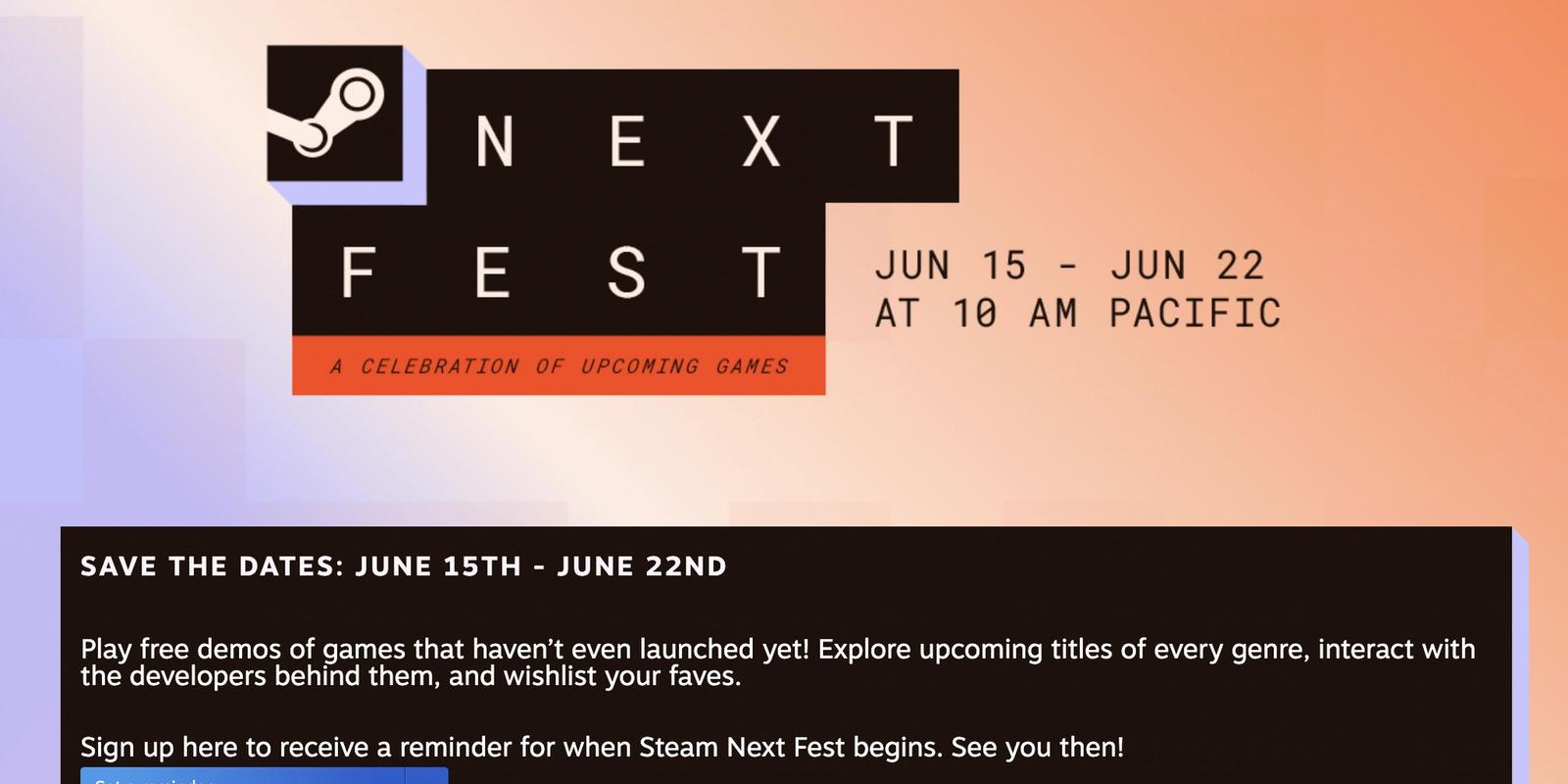
This becomes especially valuable during:
- Steam Next Fest,
- demo launches,
- early-access campaigns,
- and major game updates.
Traditional agencies generally move slower because of:
- negotiation cycles,
- contract approvals,
- campaign coordination,
- and creator scheduling.
In modern Steam marketing, slower execution can reduce momentum significantly.
Hands-On Support
Traditional agencies generally provide more strategic support.
This includes:
- Full campaign oversight
- Performance consulting
- Creative guidance
- Cross-platform coordination
Jestr focuses more heavily on scalability and efficiency.
The tradeoff is straightforward:
- Jestr = agile + cost-efficient
- Agencies = strategic + scalable
Pros of Using Jestr for Gaming Creator Marketing
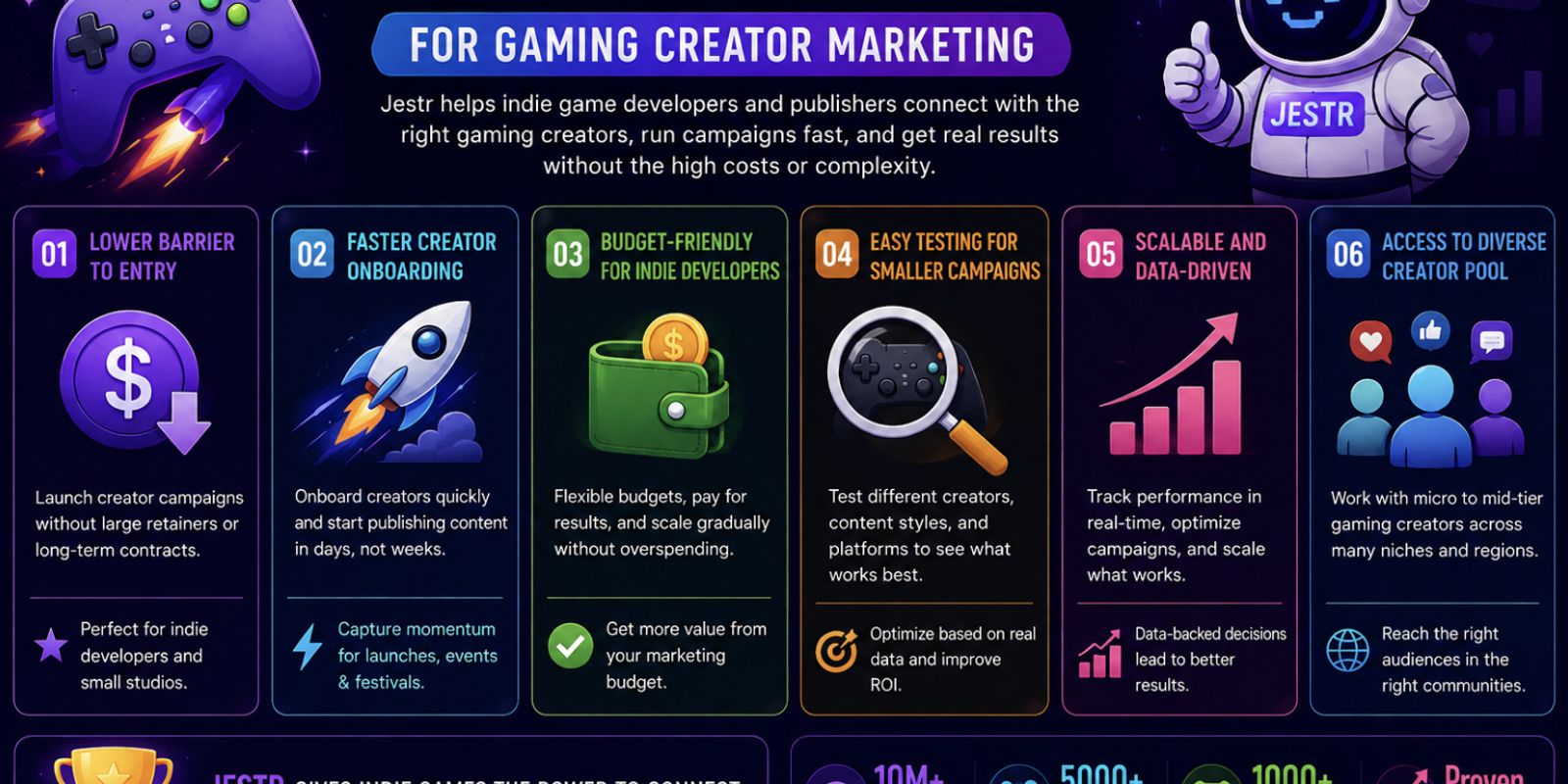
Lower Barrier to Entry
Jestr dramatically lowers the entry barrier for influencer marketing.
Smaller studios can run campaigns without:
- enterprise budgets,
- expensive retainers,
- or long-term contracts.
This democratizes creator marketing for indie developers.
Faster Creator Onboarding
Marketplace systems simplify creator recruitment.
Instead of spending weeks emailing creators individually, developers can launch campaigns and begin publishing content quickly.
This becomes extremely valuable during:
- launch windows,
- Steam festivals,
- and viral momentum opportunities.
Budget-Friendly for Indie Developers
One of the biggest advantages of Jestr is cost efficiency.
Many indie studios simply cannot justify:
- large PR retainers,
- expensive influencer sponsorships,
- or full-service marketing agencies.
Marketplace-based creator campaigns allow developers to scale visibility more gradually.
Easy Testing for Smaller Campaigns
Jestr works especially well for testing.
Developers can experiment with:
- creator fit,
- content style,
- genre audiences,
- and platform performance.
This iterative approach aligns well with modern performance-driven gaming creator marketing.
Why Jestr-Style Platforms Are Rare in China
One important difference between Western and Chinese gaming ecosystems is how creator relationships are structured.
Platforms exactly like Jestr are relatively uncommon in mainland China because the market traditionally relies more heavily on:
- MCN agencies,
- publisher-managed creator systems,
- platform-approved influencers,
- and long-term creator partnerships.
Chinese gaming campaigns often prioritize:
- retention quality,
- engagement depth,
- lifecycle monetization,
- and conversion performance.
Platforms like Douyin and Bilibili have massive creator ecosystems, but campaigns are typically more curated and centrally managed compared to the faster marketplace-driven approach common in Western creator platforms.
This is one reason Jestr-style systems have scaled more rapidly in Western indie ecosystems, where developers prioritize rapid testing, flexible scaling, and lower operational overhead.
Pros of Using Traditional Agencies
Strategic Guidance
Traditional agencies provide deeper strategic support.
This includes:
- campaign architecture,
- audience targeting,
- regional planning,
- and influencer positioning.
For larger publishers, this strategic layer can be extremely valuable.
Larger Creator Relationships
Agencies often maintain stronger relationships with:
- major Twitch streamers,
- premium YouTube creators,
- and large gaming influencers.
These relationships can unlock visibility opportunities that are difficult to access independently.
Full-Service Campaign Management
Agencies handle:
- contracts,
- creator scheduling,
- negotiations,
- reporting,
- and campaign logistics.
For enterprise launches, this significantly reduces operational complexity.
Better for AAA or Large-Scale Launches
AAA campaigns often require:
- global coordination,
- localization,
- paid amplification,
- PR integration,
- and multi-region creator management.
Traditional agencies are usually better structured for campaigns at this scale.
When Jestr Makes More Sense for Indie Game Influencer Campaigns
Jestr-style gaming marketing platforms work especially well for:
Small Studios
Lower campaign costs make creator marketing accessible for indie teams.
Early-Stage Launches
Developers can test visibility before scaling budgets.
Wishlist Growth Campaigns
Micro-creators often generate highly efficient Steam wishlist conversion.
Testing Influencer Performance
Studios can evaluate creator ROI before expanding campaigns further.
When an Agency Is the Better Choice
Traditional agencies are usually stronger for:
Global Launches
Large campaigns require coordinated international execution.
Large Media Budgets
Enterprise-level campaigns benefit from structured strategy.
Multi-Region Campaigns
Localization and creator segmentation become increasingly complex internationally.
Full PR + Influencer Integration
Agencies can combine:
- gaming PR,
- influencer marketing,
- paid media,
- events,
- and community management into one integrated launch strategy.
Can You Combine Both?
Increasingly, many publishers combine both approaches.
Hybrid Campaign Strategies
Some studios use:
- Jestr for scalable creator volume
- Agencies for top-tier influencers and strategy
This creates both agility and structured oversight.
Agencies Using Creator Platforms
Even agencies themselves increasingly rely on creator marketplace infrastructure to scale campaigns more efficiently.
This reflects a broader industry shift toward platform-driven campaign execution.
Scaling Campaigns Efficiently
A hybrid structure often allows publishers to:
- Test rapidly
- Scale efficiently
- Reduce overhead
- Expand creator diversity
This is becoming increasingly common in modern game influencer campaigns.
Final Verdict: Jestr vs Influencer Agencies for Modern Game Promotion
The debate around Jestr vs influencer agencies is not about which option is universally better it depends on campaign goals, budget, timeline, and launch scale.
Jestr offers:
- agility,
- faster execution,
- lower costs,
- scalable creator testing,
- and stronger accessibility for indie studios.
Traditional agencies offer:
- strategic oversight,
- premium creator relationships,
- enterprise-level coordination,
- and stronger support for global launches.
As creator-led discovery becomes increasingly important across Steam, TikTok, YouTube, and Twitch, gaming marketing is evolving toward performance-driven ecosystems focused on:
- engagement quality,
- wishlist velocity,
- conversion efficiency,
- and measurable ROI.
At Asia Game Buzz, we help studios and publishers navigate both creator marketplaces and traditional influencer ecosystems across Western and Asian gaming markets. From Steam wishlist campaigns and TikTok creator marketing to PR strategy, launch execution, and cross-region creator campaigns, our team specializes in scalable game marketing strategies built for modern game discovery.
- Reddit Discussion About Indie Marketing Without Big Agency Budgets
- Good supporting quote for “budget-friendly marketing.”
- No big money, no marketing agency. Just time, strategy, a clear system, and consistency.Reddit Discussion – Indie Game Marketing System With Almost No Budget
Reddit Discussion About Indie Marketing Challenges
Useful for emphasizing why affordable creator campaigns matter for indie studios.
There aren't a whole lot of options for indie games in terms of marketing.
even if you have a ton of money for marketing, if it doesn't generate enough return on investment, it's still a failed marketing.
Original Reddit thread:Reddit Discussion – Indie Game Post-Release Marketing