

In 2026, making a great game is no longer enough. The gaming industry has become more competitive, more creator-driven, and more algorithmically influenced than ever before. Developers are now competing not only against major AAA publishers, but also against thousands of indie games fighting for visibility across Steam, TikTok, YouTube, Discord, mobile storefronts, and console ecosystems.
That’s why video game marketing has become one of the most important investments for modern game studios.
Fortune Business Insights projects the global video game market will grow from USD 255.03 billion in 2026 to USD 415.78 billion by 2034, driven heavily by online gaming, mobile expansion, esports, creator ecosystems, and social gaming behavior. Asia-Pacific alone now accounts for more than 53% of global gaming revenue.
From our direct experience supporting launches across both Western and Asian gaming markets, one trend has become increasingly clear: games that successfully combine creator marketing, community building, and performance-driven digital strategy consistently outperform titles relying only on paid ads or launch trailers.
This shift has also created new creator-focused marketing platforms specifically built for games. In Western markets, platforms like Jestr help developers scale creator campaigns, distribute Steam keys, and drive wishlist growth through influencers and short-form content creators. Meanwhile in China, gaming promotion often revolves around ecosystems tied to Bilibili, Douyin, Xiaohongshu, and MCN-driven creator networks that focus heavily on livestream commerce, engagement retention, and long-term player communities.
Successful game marketing is no longer something developers start after launch it needs to be integrated into development from the very beginning. Modern marketing strategies now involve audience research, community building, creator ecosystems, storefront optimization, social media planning, and long-term retention strategies long before a game is released.
This guide explains everything developers need to know about marketing video games successfully in 2026.
What Is Video Game Marketing?
A video game is a form of interactive digital entertainment played across smartphones, PC, laptops, handheld devices, and gaming consoles. Modern games combine advanced graphics, storytelling, AI systems, multiplayer experiences, and immersive sound design to increase engagement and player retention.
Video game marketing refers to the process of promoting a game before, during, and after launch to attract players, generate awareness, increase conversions, and sustain long-term engagement.
Modern video game digital marketing combines multiple disciplines, including:
- Steam marketing
- influencer campaigns
- social media promotion
- creator partnerships
- paid advertising
- gaming PR
- community management
- CRM and retention
- performance analytics
Unlike traditional entertainment marketing, games require ongoing engagement strategies because retention, community momentum, and player behavior directly impact long-term success.
Today, successful game marketing is not just about generating attention — it’s about building ecosystems around games.
Why Video Game Marketing Matters More Than Ever
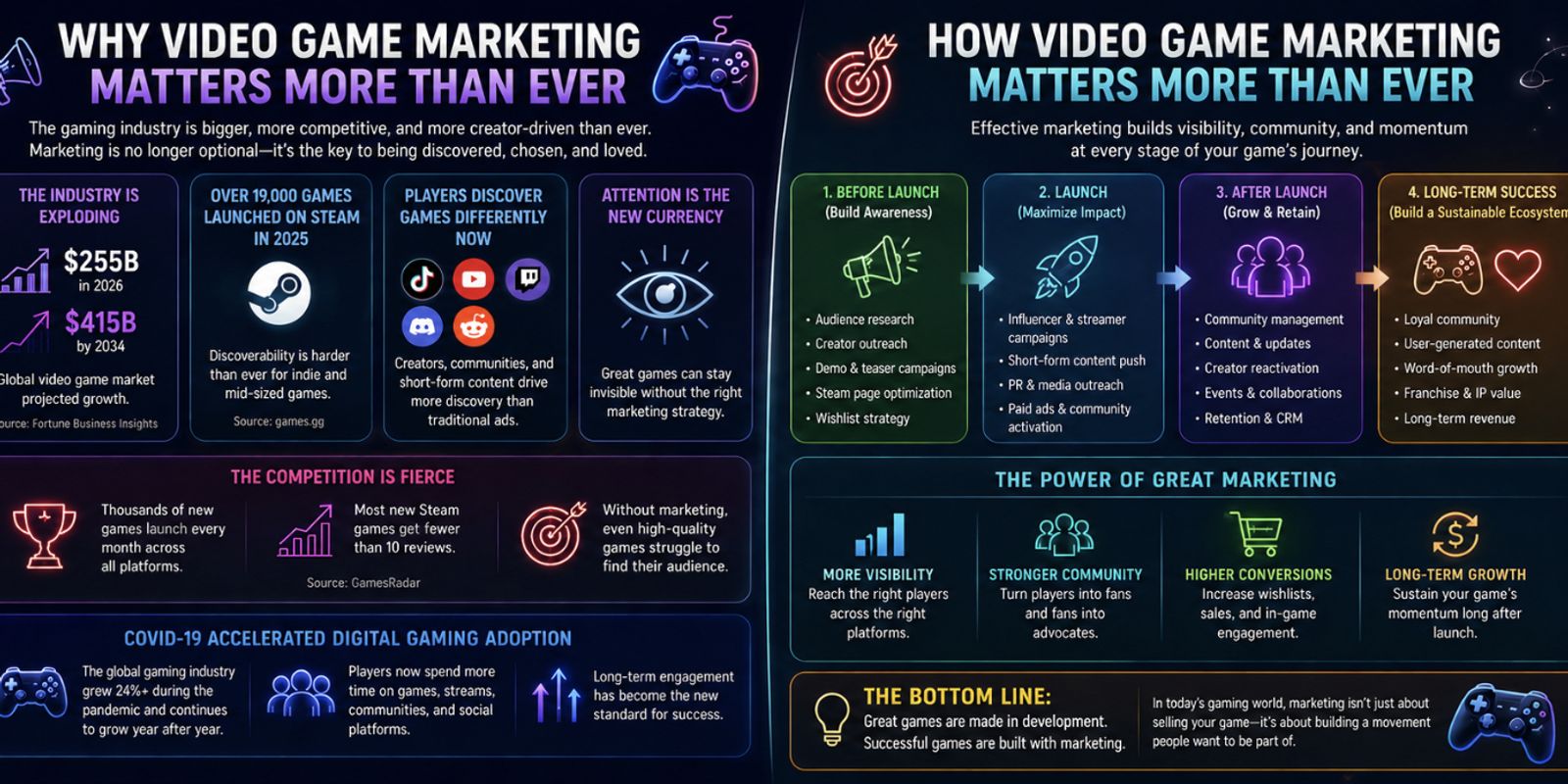
The gaming industry is now more saturated than ever before. The industry also experienced massive acceleration after COVID-19, permanently shifting consumer behavior toward digital entertainment, livestreaming, and online communities. The global video game industry grew more than 24% during the pandemic period, dramatically increasing long-term player engagement and digital consumption habits.
Steam, console storefronts, mobile app stores, and social platforms are flooded with new releases every day. Without effective marketing, even high-quality games can struggle to gain visibility.
At the same time, player discovery behavior has fundamentally changed.
Modern audiences increasingly rely on:
- TikTok clips
- YouTube Shorts
- Twitch streamers
- Discord communities
- Reddit discussions
- creator recommendations
to discover games.
Traditional banner advertising and gaming media coverage still matter, but creator-led discovery now plays a much larger role in player acquisition.
Games with:
- emotionally reactive gameplay
- social unpredictability
- meme potential
- highly watchable mechanics
often spread significantly faster online.
This is especially true for:
- multiplayer games
- horror titles
- extraction shooters
- roguelikes
- survival games
- simulation experiences
Modern gaming marketing is now heavily driven by social visibility and algorithmic momentum.
How Video Game Marketing Has Evolved
Over the last decade, game marketing has evolved dramatically.
Previously, most studios focused heavily on:
- gaming press coverage
- cinematic trailers
- event showcases
- display advertising
Today, discovery is increasingly driven by:
- creator ecosystems
- short-form content
- livestream moments
- algorithmic feeds
- community engagement
Platforms like TikTok, YouTube, Twitch, Discord, Jetsr, Douyin, Bilibili, etc. now shape game discovery globally.
This shift is especially important in Asian gaming markets.
According to the 2025 China Game Industry Report, China’s gaming market surpassed 350 billion yuan in annual revenue, while creator ecosystems and overseas expansion continue becoming increasingly important growth drivers for publishers.
Across the Asia-Pacific region including China, India, Japan, and Australia rising smartphone penetration and internet access continue to accelerate market expansion. North America also remains a major contributor, supported by strong console innovation, widespread connectivity, and highly active gaming communities.
Globally, influencer marketing spending surpassed $30 billion in 2025, with gaming among the fastest-growing sectors in the creator economy. Generation Z’s strong preference for digital-native entertainment has further fueled this growth.
Overall, game marketing is no longer just about media buying it’s about participation, communities, and cultural momentum.
Core Pillars of Digital Marketing for Video Games
Content Marketing and Storytelling
Content marketing remains one of the strongest long-term strategies for promoting games.
This includes:
- developer blogs,
- lore content,
- gameplay breakdowns,
- behind-the-scenes videos,
- patch notes,
- creator collaborations,
- and narrative-driven social content.
Strong storytelling builds emotional investment before launch.
Games that successfully create: identity, mystery, culture, fandom, or social conversationoften sustain momentum far longer after release.
In modern gaming ecosystems, players increasingly want to feel connected to a game’s world and community before purchasing.
Today, some of the strongest visibility drivers for indie games include:
- Steam festivals
- TikTok virality
- YouTube creators
- Twitch streamers
- Reddit discussions
- creator-generated memes
- influencers engagement
Visibility on Steam often comes from massive external traffic spikes. Once Steam detects strong outside engagement, games may receive additional algorithmic exposure through:
- Discovery Queue
- Popular Upcoming
- More Like This
- Steam recommendations
This is why creator ecosystems now play such a major role in Steam marketing success.
Paid Advertising and Performance Marketing
Paid advertising still plays a major role in digital marketing video games, particularly for:
- mobile games,
- free-to-play titles,
- live-service games,
- and Steam wishlist campaigns.
Common paid channels include:
- TikTok Ads,
- Meta Ads,
- YouTube pre-roll,
- Google UAC,
- Reddit Ads,
- Tencent Ads
- and creator whitelisting campaigns.
However, acquisition costs continue rising globally. As a result, publishers are increasingly focusing on:
- conversion quality,
- retention,
- engagement depth,
- creator-driven traffic
rather than pure impression volume.
AI-powered marketing is also becoming a major trend in 2026. Studios increasingly use AI for:
- audience segmentation
- predictive retention analysis
- dynamic ad creatives
- personalized recommendations
- automated localization
Future marketing campaigns will likely become highly personalized across platforms and player behaviors.
Community Building and Engagement
Community has become one of the most valuable assets in modern game marketing.
Successful studios actively build communities through:
- Discord servers
- Reddit engagement
- creator interactions
- livestream participation
- social media communication
Strong communities increase:
- player retention
- organic reach
- referral traffic
- user-generated content
- long-term monetization
For indie developers especially, a passionate community can outperform large advertising budgets.
Many breakout indie successes in recent years were driven more by creator momentum and community culture than traditional paid marketing.
Multiplayer gaming and online social experiences remain among the strongest long-term growth drivers for the global gaming market.
Community-driven games also tend to perform better in creator ecosystems because players naturally generate memes, clips, fan content, livestream moments, social discussions that continuously amplify visibility.
In China, livestreaming commerce tied to gaming continues growing rapidly. Some games have reportedly achieved monthly virtual goods sales exceeding 100 million RMB through official livestream commerce initiatives, while consumer interest in purchasing virtual items during streams continues increasing. Industry reports also show Chinese mobile game marketing is shifting toward lean growth models centered on data, creativity, intelligent targeting, and deep community operations rather than pure ad spending alone.

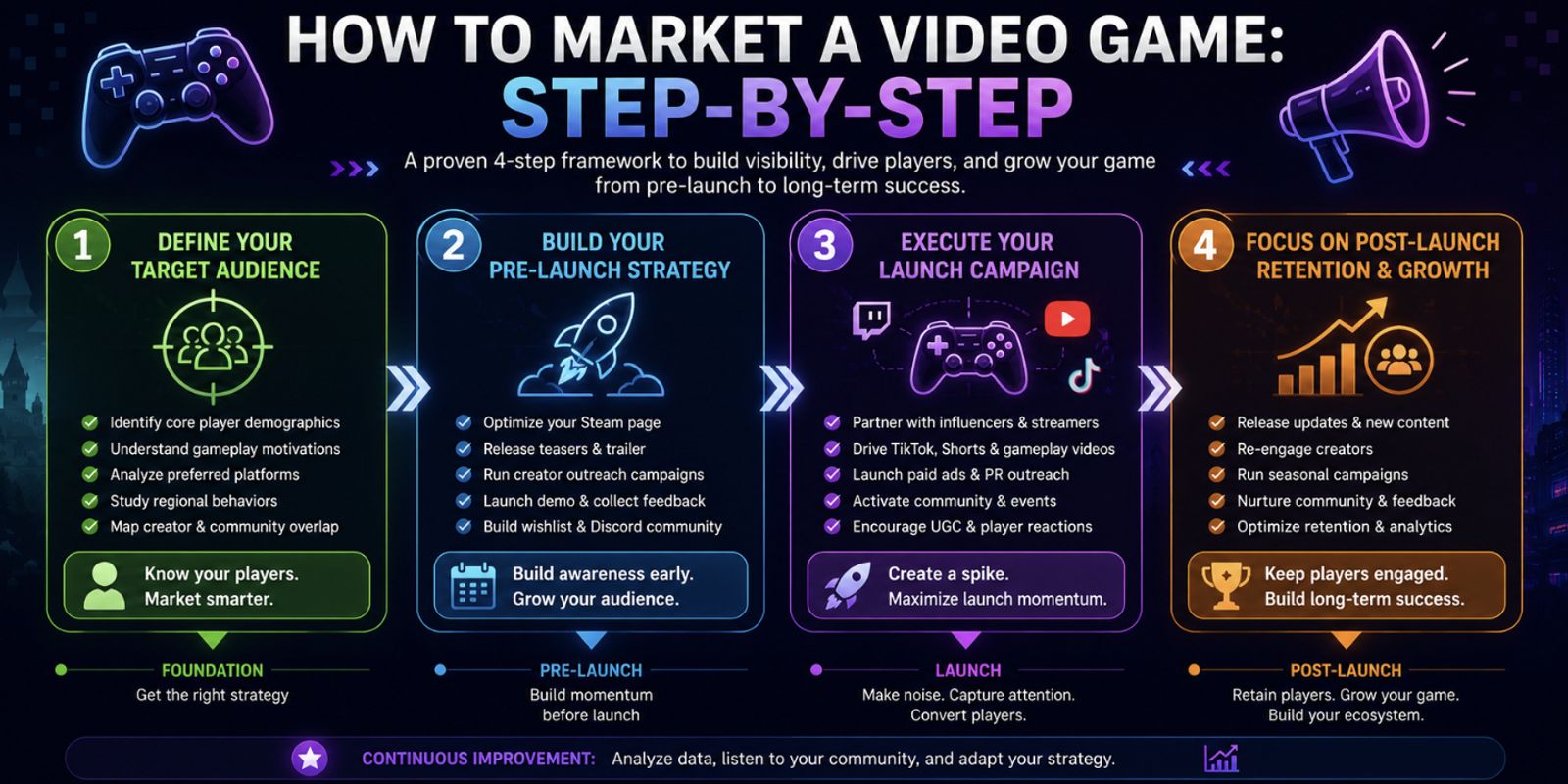
How to Market a Video Game: Step-by-Step
Step 1: Define Your Target Audience
One of the biggest mistakes developers make is marketing too broadly.
Effective game marketing starts with identifying:
- core player demographics,
- gameplay motivations,
- preferred platforms,
- regional behaviors,
- and creator overlap.
A hardcore extraction shooter audience behaves very differently from a casual mobile simulation audience.
Understanding player psychology improves:
- creator selection,
- advertising performance,
- community messaging,
- and conversion efficiency.
Modern marketing is increasingly audience-first rather than platform-first.
Step 2: Build Your Pre-Launch Strategy
Pre-launch marketing is critical.
Studios should begin building visibility months before launch through:
- Steam page optimization,
- teaser campaigns,
- creator outreach,
- demo launches,
- wishlist campaigns,
- and Discord growth.
Steam wishlist velocity remains one of the most important discoverability factors in the PC ecosystem.
Wishlist spikes influence:
- recommendation visibility,
- Popular Upcoming rankings,
- festival placement,
- and algorithmic exposure.
This is why many developers now prioritize creator marketing long before launch week.
Platforms like Jestr increasingly help indie developers organize scalable creator campaigns during:
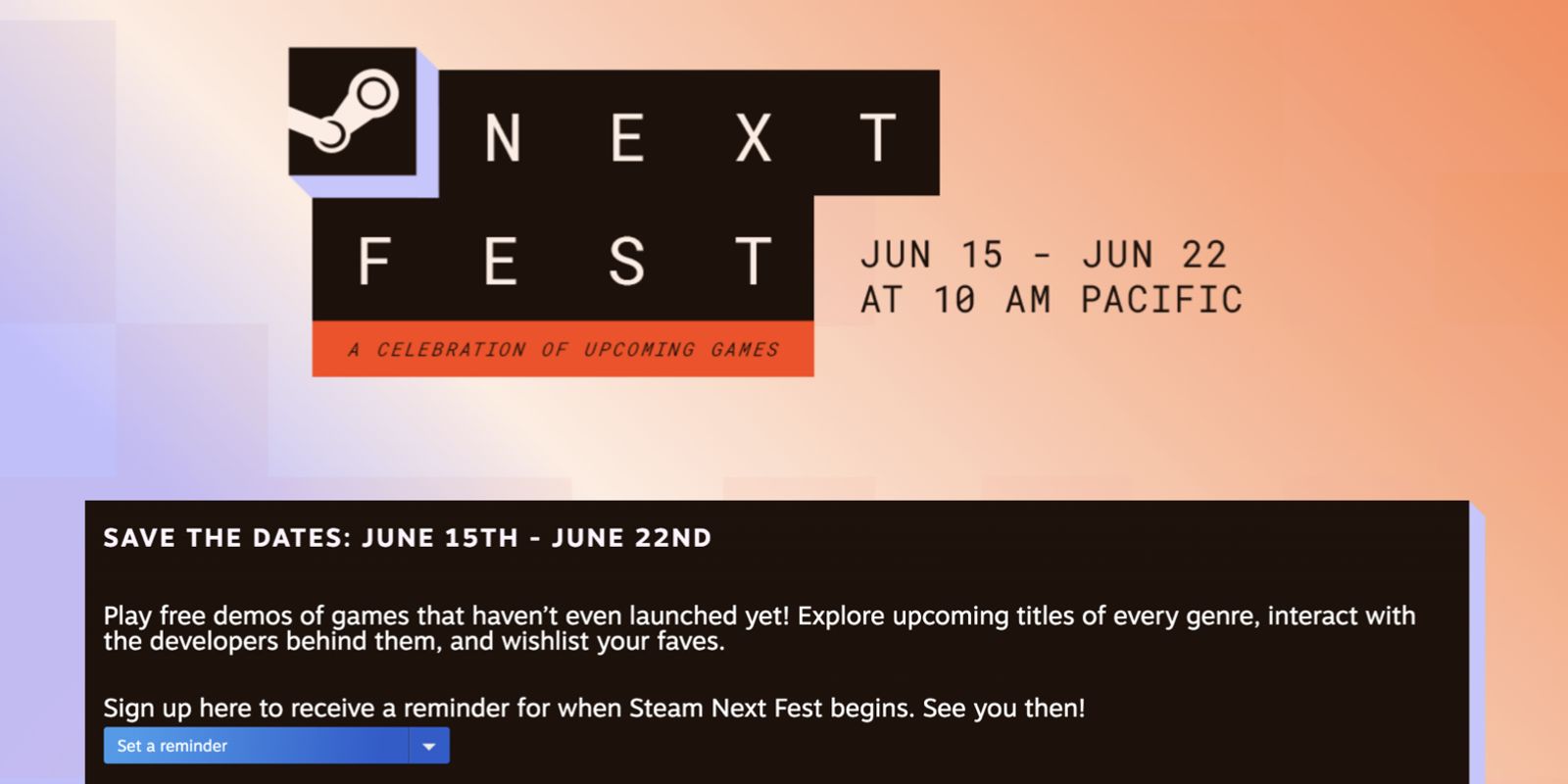
- Steam Next Fest
- demo launches
- early access periods
- wishlist campaigns
Step 3: Execute Your Launch Campaign
Launch week is about maximizing momentum.
Successful launches usually combine:
- influencers,
- Twitch streams,
- TikTok clips,
- YouTube gameplay videos,
- paid ads,
- PR outreach,
- community events,
- and creator-generated content.
Games that create strong emotional reactions during launch often receive additional organic visibility through social sharing and recommendation algorithms.
This momentum effect is especially important on Steam.
Step 4: Post-Launch Retention and Growth
Marketing does not end after launch.
Long-term success depends heavily on:
- updates,
- creator reactivation,
- seasonal content,
- community engagement,
- and retention systems.
Games that continue feeding creators with:
- new content,
- updates,
- memes,
- challenges,
- or live-service eventsoften sustain visibility significantly longer.
Retention has become one of the strongest indicators of commercial success in modern gaming.
Future gaming ecosystems are increasingly shifting toward:
- live-service engagement
- creator-supported communities
- direct-to-consumer ecosystems
- long-term player retention strategies
Marketing Video Games Across Different Platforms
Steam Game Marketing
Steam remains the dominant PC storefront globally.
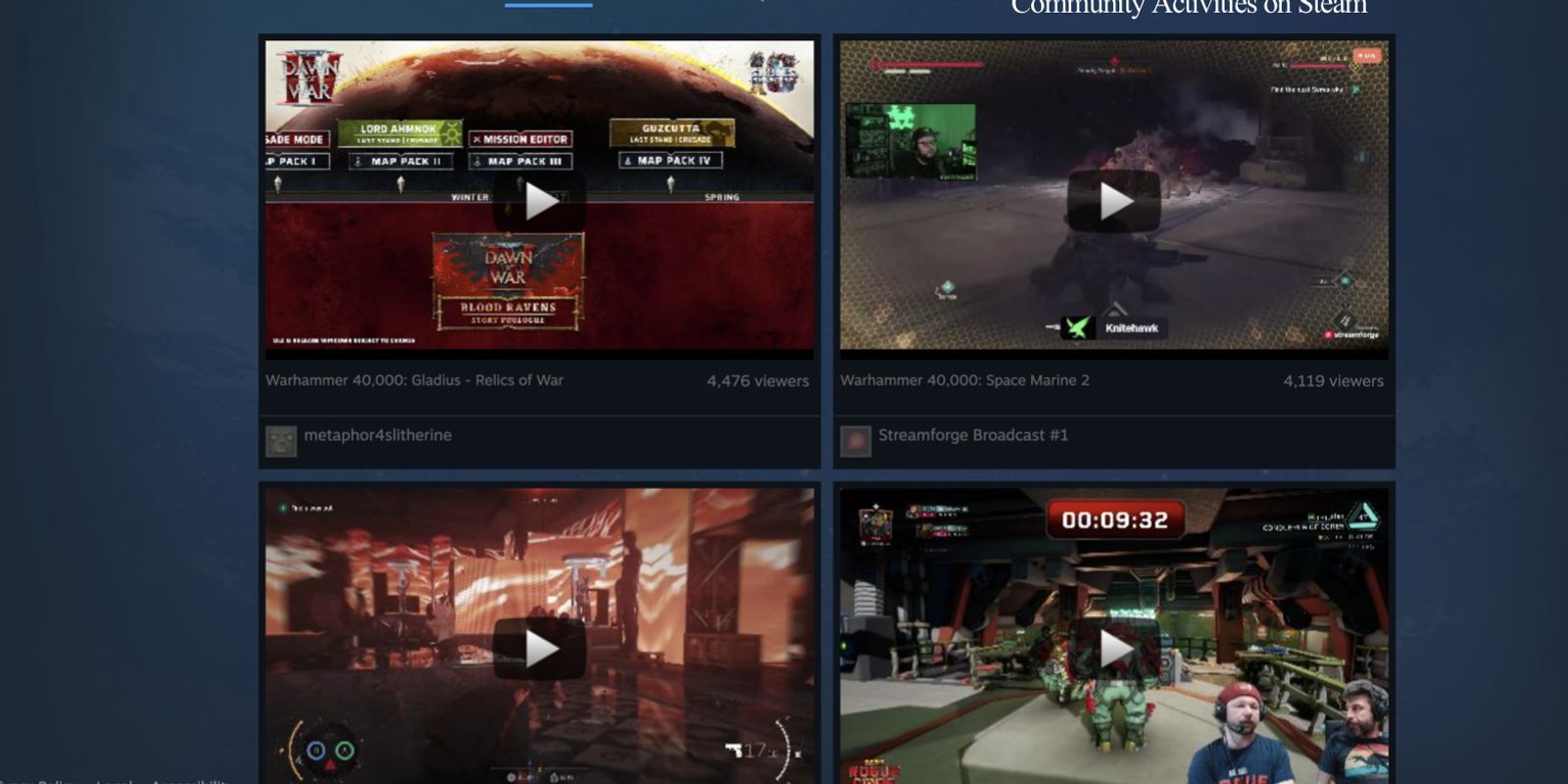
Successful Steam marketing includes:
- wishlist campaigns,
- Steam Next Fest participation,
- influencer traffic,
- user review generation,
- and community activation.
Games with strong external traffic often perform better inside Steam’s recommendation systems.
This is one reason creator marketing has become central to modern Steam strategy.
Mobile Game Marketing
Mobile marketing remains heavily performance-driven.
Successful mobile campaigns rely on:
- CPI optimization,
- retention analytics,
- creator-led ads,
- UGC-style creatives,
- and live operations.
However, mobile acquisition costs continue increasing globally, forcing publishers to focus more heavily on retention quality and monetization efficiency.
Console Game Marketing
Console marketing often emphasizes:
- exclusivity,
- platform partnerships,
- showcase visibility,
- and premium brand positioning.
Console audiences are generally influenced heavily by:
- reviews,
- trailers,
- community trust,
- and franchise reputation.
Unlike mobile games, console campaigns often rely more heavily on long-term brand equity.
Video Game Digital Marketing Channels That Work
Social Media Marketing for Games
Social media now plays a central role in game discovery.
The strongest-performing gaming platforms include:
- TikTok,
- YouTube Shorts,
- Instagram Reels,
- X/Twitter,
- Reddit,
- Discord.
- Bilibili,
Short-form gameplay content dominates modern gaming visibility.
Games with:
- funny moments,
- emotional reactions,
- emergent chaos,
- or visually readable mechanicsoften perform exceptionally well in creator ecosystems.
Influencer and Streamer Partnerships
Influencer campaigns have become one of the strongest forms of game promotion.
Modern gaming creator marketing revolves around:
- micro-creators,
- Twitch streamers,
- YouTube gameplay creators,
- TikTok gaming channels,
- and niche gaming communities.
Recent creator economy studies show brands increasingly favor micro-creators because of:
- stronger engagement,
- lower costs,
- and higher audience trust.
For indie games especially, creator authenticity often matters more than massive follower counts.
Influencer and Streamer Partnerships
Influencer campaigns have become one of the strongest forms of game promotion.
Modern gaming creator marketing revolves around:
- micro-creators
- Twitch streamers
- YouTube gameplay creators
- TikTok gaming channels
- niche gaming communities
Recent creator economy studies show brands increasingly favor micro-creators because of:
- stronger engagement
- lower costs
- higher audience trust
For indie games especially, creator authenticity often matters more than massive follower counts.
Email Marketing and CRM
Email marketing remains underrated in gaming.
Strong CRM systems improve:
- player retention,
- update awareness,
- monetization,
- and reactivation.
Successful live-service games frequently rely on:
- segmented campaigns,
- personalized messaging,
- seasonal events,
- and player lifecycle marketing.
Owned audiences remain extremely valuable because they reduce reliance on constantly changing algorithms.
Common Video Game Marketing Mistakes to Avoid
Some of the biggest marketing mistakes developers make include:
- starting marketing too late
- ignoring creators
- poor Steam page optimization
- weak community engagement
- over-reliance on paid ads
- unclear audience targeting
- failing to track retention metrics
Another common mistake is prioritizing visibility over conversion quality.
High impressions mean very little without:
- wishlist growth
- retention
- engagement
- community momentum
Successful marketing focuses on sustainable player ecosystems rather than vanity metrics alone.
Final Thoughts: Building a Winning Video Game Marketing Strategy
Modern video game marketing is no longer just about advertising it’s about building ecosystems around games.
Successful launches in 2026 combine:
- creator marketing,
- community building,
- Steam optimization,
- paid acquisition,
- content marketing,
- and long-term player engagement.
As gaming markets continue growing across both Western and Asian regions, developers must adapt to increasingly social and creator-driven discovery systems. Games that successfully combine creator visibility, strong community engagement, and data-driven marketing execution are far more likely to break through today’s crowded marketplaces.
Future gaming marketing trends will increasingly revolve around:
- AI-powered personalization,
- creator ecosystems,
- short-form content,
- direct-to-consumer communities,
- and long-term live-service engagement.
At Asia Game Buzz, we help game studios and publishers navigate modern game marketing across global markets through creator campaigns, Steam marketing, gaming PR, influencer strategy, community growth and performance-driven launch execution.
From indie launches and creator campaigns to cross-region game marketing across Asia and the West, our team specializes in scalable marketing strategies designed for modern game discovery. Whether you’re launching an indie PC title, a mobile game, or a global multiplayer experience, building the right marketing strategy early can make the difference between getting lost in the algorithm or building long-term player momentum.