
In today’s competitive gaming landscape, social media marketing for games has become one of the most powerful ways to build awareness, drive installs, and cultivate long-term player communities. Platforms like TikTok, YouTube, X, Instagram, and Discord are no longer optional channels—they are where players discover, discuss, and influence the success of new titles.
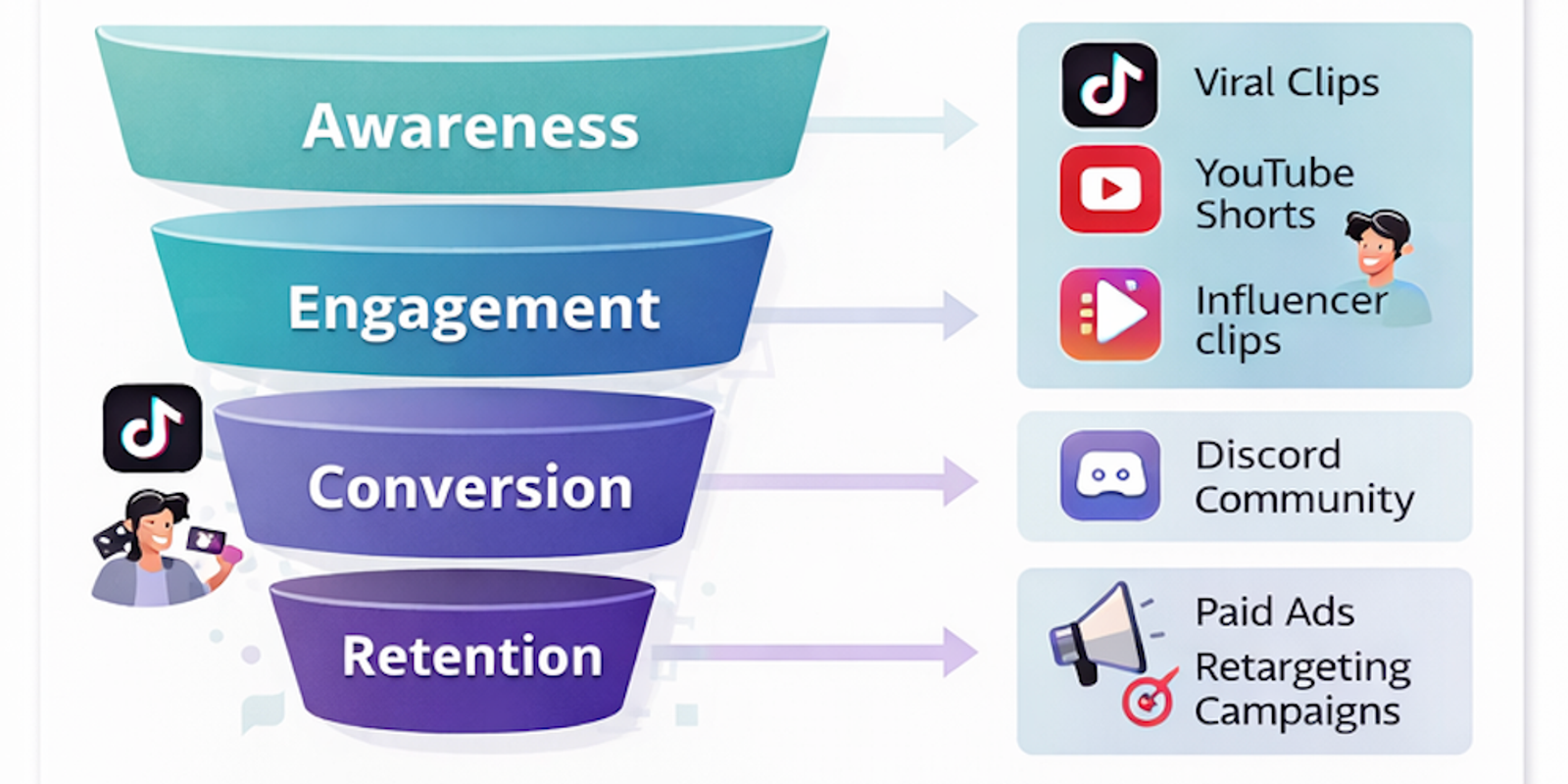
For studios and publishers serious about marketing online games, social media is not just about posting trailers. It is about building ecosystems where content, community, and performance marketing work together to drive installs, retention, and lifetime value (LTV).
This guide explains how to execute high-impact social media marketing for video games, supported by real industry practices and performance-driven frameworks.
Why Social Media Is Critical for Video Game Marketing
Why is social media important for marketing games?
Because it enables two-way interaction at scale. Unlike traditional advertising, social platforms allow players to comment, remix, react, and advocate.
Key advantages include:
- Faster feedback during development and soft launch
- Organic word-of-mouth amplification
- Stronger emotional connection with players
- Real-time community management
For both mobile and PC/console titles, marketing games through social media shortens the distance between developers and players—improving trust, engagement, and retention.
Understanding the Gaming Audience on Social Platforms
Gamers are not a single demographic. Effective marketing online games requires segmentation.
Core Gamers
Value mechanics, balance updates, and competitive integrity. They engage deeply on YouTube, Reddit, Discord, and X.
Casual Gamers
Respond strongly to humor, trends, short-form video, and social proof. TikTok and Instagram Reels dominate here.
Creators & Modders
Look for recognition, collaboration, and early access opportunities.
In our experience working across U.S. and Asian markets, behavioral segmentation (watch time, comment patterns, content saves) is far more predictive than age or location alone.
Understanding these distinctions is foundational to successful social media marketing for games.
Best Social Media Platforms for Marketing Video Games
A multi-platform approach ensures full-funnel coverage.
- TikTok – Viral discovery, short gameplay clips, trend participation
- YouTube – Trailers, dev diaries, walkthroughs, long-form content
- X (Twitter) – Real-time updates and direct engagement
- Instagram – Brand identity, Reels, visual storytelling
- Discord – Community retention, live feedback, event coordination
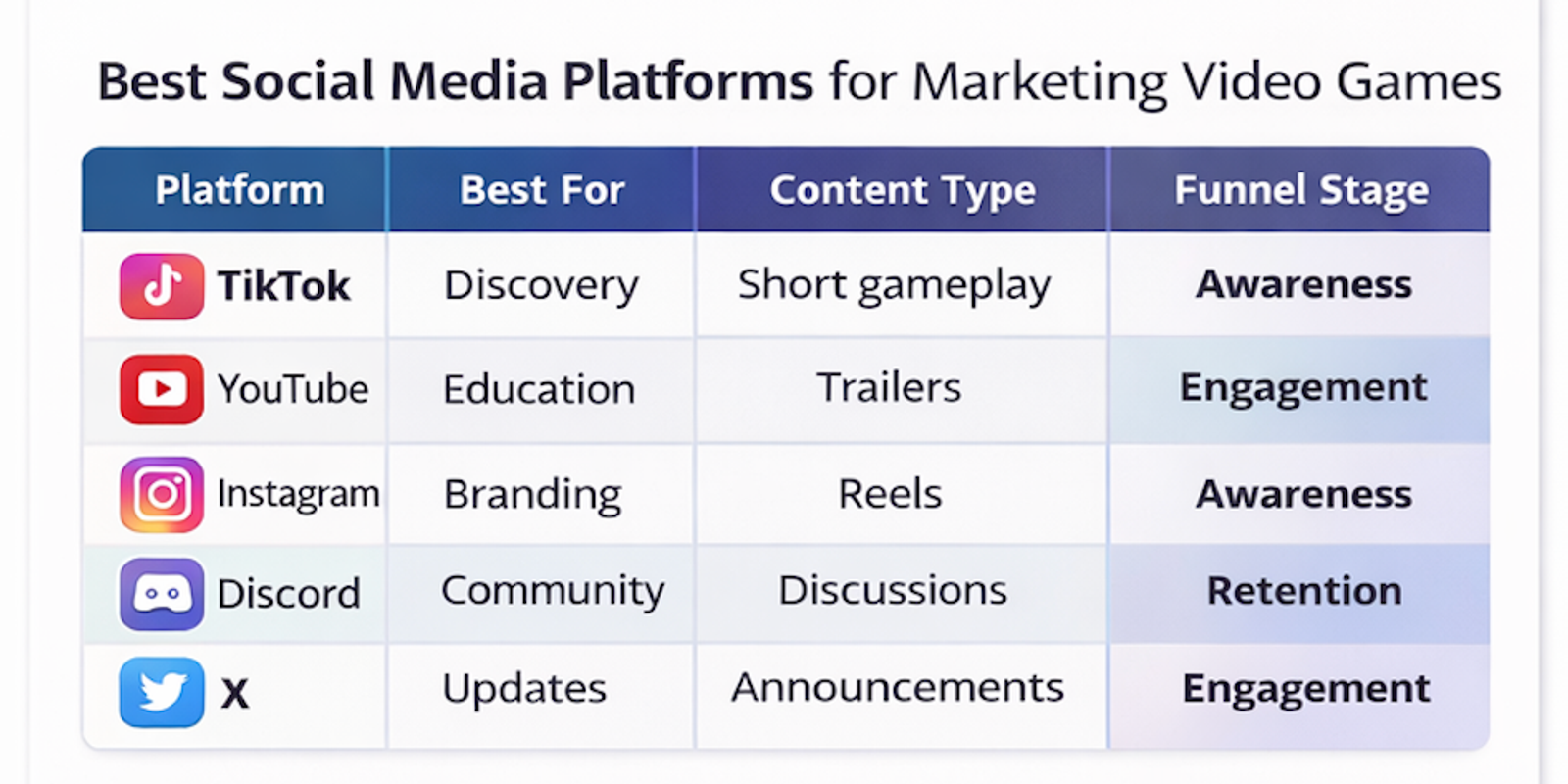
Each platform plays a distinct role in social media marketing for video games, from awareness to retention.
Social Media Marketing Strategies for Video Games
Successful strategies prioritize authenticity over aggressive selling.
Best practices:
- Establish a recognizable brand voice
- Share behind-the-scenes development updates
- Encourage user-generated content (UGC)
- Engage daily via comments, polls, and reposts, align social content with in-game live ops
One consistent lesson from high-performing campaigns: players respond to transparency and personality—not corporate messaging.
Using Social Media Games for Marketing and Engagement
What are social media games for marketing?
They are interactive mechanics designed to increase engagement directly within social platforms.
Examples include:
- TikTok hashtag challenges tied to in-game events
- Instagram story polls influencing minor gameplay elements
- Referral reward programs integrated with social sharing
- Mini-quiz mechanics tied to lore or characters
These tactics transform passive audiences into participants, strengthening retention and shareability.
Online Game Marketing Campaign Ideas That Work
High-performing campaigns combine creativity with social mechanics.
Proven examples:
- Limited beta access for social followers
- Community voting on cosmetic designs
- Fan art and cosplay competitions
- Countdown campaigns tied to patch releases
The most effective campaigns make marketing online games feel like an extension of gameplay—not an interruption.
Content Types That Perform Best for Game Marketing
Data consistently shows that the following content formats drive the strongest results:
- Short gameplay clips with subtitles
- Meme-based content tied to game mechanics
- Patch notes and update highlights
- Player testimonials and reaction videos
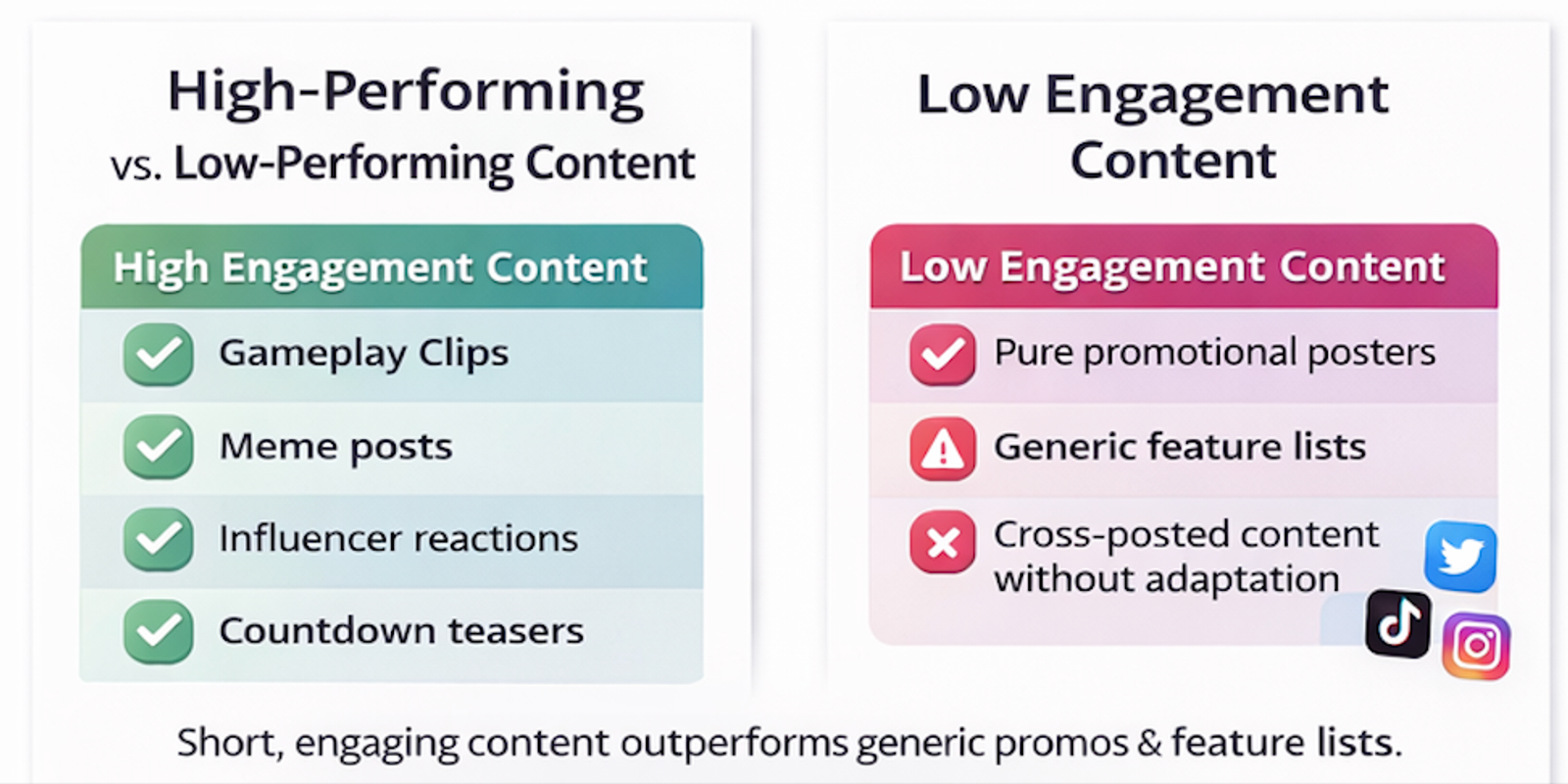
Optimizing these formats across platforms strengthens overall social media marketing for games performance.
Influencer and Community-Driven Marketing for Games
Influencers remain one of the most trusted discovery channels in gaming.
Micro- and mid-tier creators often outperform mega-creators in:
- Engagement rate
- Authenticity perception
- Conversion efficiency
Community-driven marketing is equally powerful. Empowering players to co-create content, moderate spaces, and influence updates builds long-term loyalty—key pillars of E-E-A-T in gaming ecosystems.
AsiaGameBuzz has supported influencer ecosystems across multiple regions, combining performance data with creator alignment to drive measurable installs and sustained engagement.
Paid Social Media Advertising for Video Games
Organic reach alone is rarely enough. Paid social ads allow precise targeting by interest, behavior, and geography. Best practices include:
- Testing multiple creatives and hooks
- Using gameplay-first visuals
- Retargeting engaged users
When aligned with organic efforts, paid campaigns significantly amplify social media marketing for video games ROI.
Measuring Performance and ROI in Game Social Media Marketing
Key metrics to track include:
- Engagement rate and follower growth
- Click-through rate (CTR)
- Cost per install (CPI)
- Retention and lifetime value (LTV)
Regular analysis ensures your marketing games strategy remains data-driven and scalable.
Common Mistakes in Social Media Marketing for Games
Avoid these pitfalls:
- Posting only promotional content
- Ignoring comments and feedback
- Copy-pasting content across platforms
- Chasing trends without brand relevance
Authenticity and consistency matter more than volume.
Future Trends in Social Media Marketing for the Gaming Industry
Looking ahead, social media marketing for games will continue to evolve alongside player behavior and platform innovation. Key trends shaping the gaming industry include
- AI-driven content personalization
- deeper creator–developer collaborations,
- the rise of community-first platforms such as Discord,
- the growing adoption of interactive and playable ad formats.
At the same time, these trends are raising the bar for game marketers. Simply “being present” on social media is no longer enough. Brands must balance creativity with data, global reach with local relevance, and short-term performance with long-term community trust. As platforms fragment and competition intensifies, executing effective social media marketing for video games requires specialized expertise, cultural insight, and continuous optimization.
This is where Asia Game Buzz comes in. AsiaGameBuzz specializes in social media marketing for video games, combining strategy, influencer ecosystems, paid acquisition, and community building.
Our approach includes:
- Data-driven content strategy
- Global and Asian market localization
- Influencer network activation
- Paid social scaling frameworks
- Community lifecycle management
By aligning emerging trends with proven execution models, Asia Game Buzz helps studios and publishers market games in ways that are measurable, scalable, and sustainable.
Staying ahead of these trends will define the next generation of social media marketing for games.