
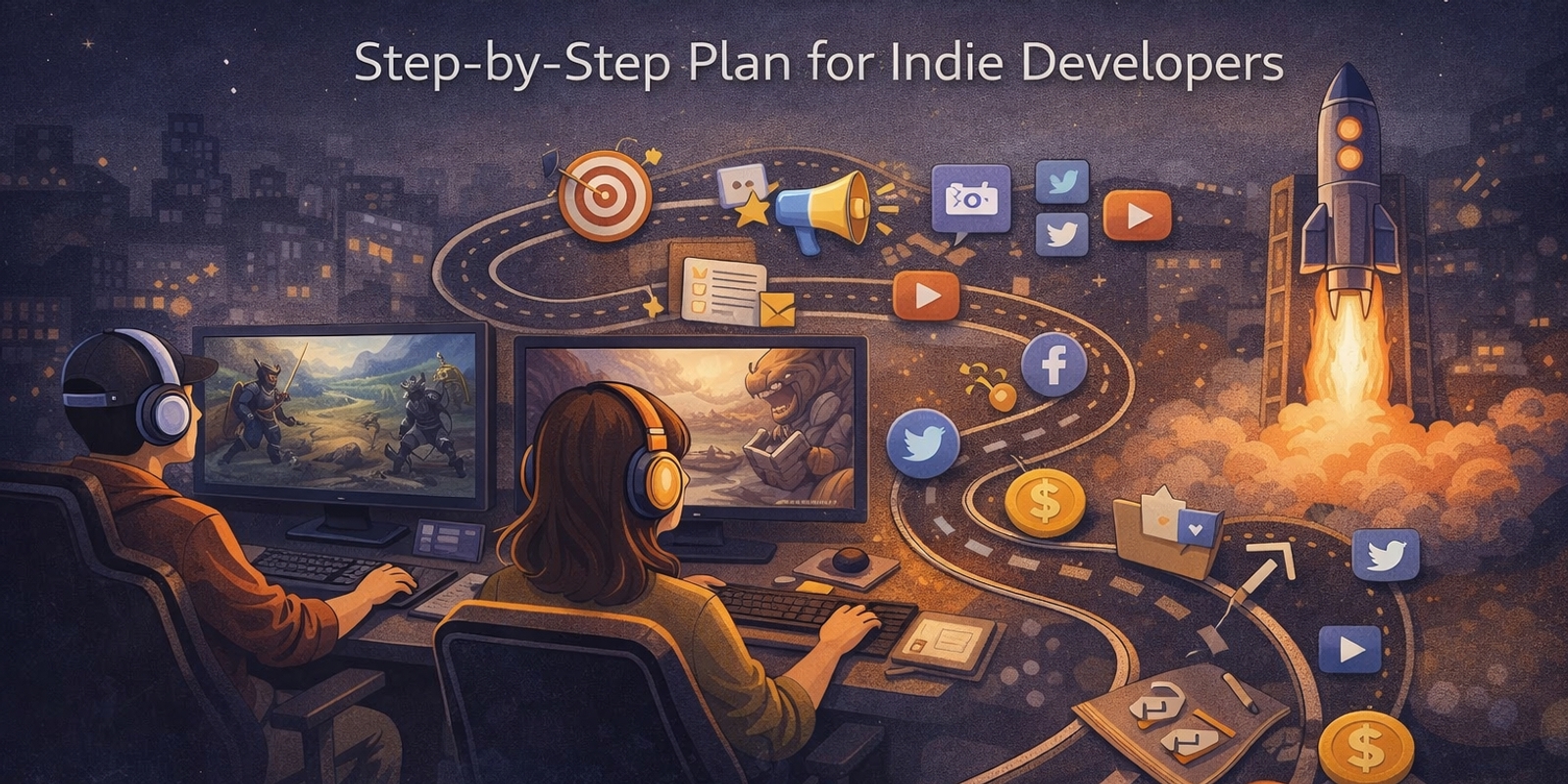
For indie developers, marketing can feel overwhelming especially when development resources are already limited. However, in today’s competitive PC gaming landscape, even the best-designed games struggle without visibility. A clear video game marketing roadmap helps indie teams plan promotion strategically, align efforts with development milestones, and avoid last-minute launch chaos. Platforms like Asia Game Buzz regularly highlight how structured planning improves long-term game visibility.
This guide presents a step-by-step indie game marketing roadmap focused on PC games and platforms like Steam, offering practical strategies developers can realistically execute, supported by industry insights from the Asia Game Buzz Insights hub.
Why a Marketing Roadmap Is Essential for Your Game
A marketing roadmap is more than a checklist it is a long-term plan that ensures awareness, community, and momentum grow alongside development. Many indie developers wait until launch to think about promotion, only to realize that discoverability cannot be built overnight. This challenge is often discussed in guides such as 5 Steps to Start Promoting PC Games in China.
A structured game marketing strategy roadmap reduces risk, clarifies priorities, and allows results such as wishlists, followers, and press interest to compound over time especially in crowded PC marketplaces influenced by emerging game trends shaping the market.
Define Your Target Audience
Every effective PC video game marketing plan begins with understanding the target audience. This goes beyond genre labels and focuses on player behavior, motivations, and discovery habits an approach emphasized in Asia Game Buzz’s market insights.
Identify what similar games your audience plays, where they find new titles (Steam, YouTube, Twitch, Reddit, Bilibili), and what drives their purchasing decisions. Clear audience definition ensures your messaging, visuals, and platform choices resonate naturally, especially when considering Chinese PC gamers and how they differ from Western players.
Set Clear Marketing Goals
Marketing without goals lacks direction. Define measurable objectives such as Steam wishlist targets, demo downloads, Discord growth, or launch-day reviews benchmarks often used in successful video game advertising plans.
Specific goals like reaching 50,000 wishlists or securing creator coverage help you evaluate which tactics are effective and keep your strategy focused, particularly when aligning with top China gaming trends and strategic guides.
Build Your Game’s Branding & Unique Identity
Strong branding makes your game instantly recognizable. Visual identity, tone of voice, and positioning should clearly communicate what your game is, who it’s for, and why it stands out in a competitive PC market.
Consistent branding across Steam, trailers, and social channels builds trust and improves conversion an essential element of any indie game marketing roadmap, especially when collaborating with partners highlighted in Asia Game Buzz’s network.
Prepare a Compelling Game Website and Landing Page
A simple website or landing page acts as your marketing hub. It provides a permanent home for your game, independent of algorithms or third-party platforms, similar to the strategic approach outlined in Asia Game Buzz’s “How We Work”.
Your site should clearly explain the game, showcase visuals, link to your Steam page, and offer a way for players to follow development. Even a minimal site adds credibility when reaching out to press, influencers, or agencies such as an indie game marketing agency.
Optimize Your Steam (or Platform) Page
For PC games, Steam is the most important conversion point in your video game advertising plan. Your Steam page must do more than exist—it must persuade, a concept reinforced in the comprehensive guide to marketing PC games in China.
Focus on the first five seconds of your trailer, clear screenshots, and concise descriptions. If your game attracts traffic from external platforms like livestreaming sites, insights from boosting game wishlists via Huya and Douyu become especially relevant.
Leverage Content Marketing & Devlogs
Content marketing allows indie teams to stay visible without large budgets. Devlogs, short gameplay clips, and behind-the-scenes posts help sustain interest, a strategy often emphasized across Asia Game Buzz insights.
For PC audiences, technical insights and transparent development stories often perform better than pure promotion, aligning with trends discussed in emerging game market analysis.
Influencer Outreach & YouTube Promotion
Influencer outreach is one of the most effective tactics in a roadmap for video game marketing, especially for indie titles. Creator partnerships provide authenticity, as outlined in powerful KOL strategies for boosting game visibility.
For developers entering China, understanding platforms like Bilibili and communities such as HeyBox is crucial for building trust and driving Steam conversions.
Run Paid Advertising Campaigns
Paid advertising should support not replace organic efforts. Ads work best once your branding and store page are validated, a principle often discussed when choosing the right Chinese game KOL strategies.
For many indie teams, ads are most effective around demos, festivals, or launch windows rather than early development, especially when guided by experienced partners like those described in Asia Game Buzz’s overview.
Engage the Community Early
Community is not a post-launch activity it is a long-term asset. Discord servers and social channels allow players to connect directly with developers, strengthening retention.
Early engagement builds loyalty and advocacy, a process supported by agencies that understand who Asia Game Buzz is and how they operate.
Launch Day Strategies
Launch day should feel like a culmination, not a starting point. Coordinated influencer content, community activity, and announcements maximize visibility an approach commonly recommended in strategic PC game promotion guides.
Global timing is critical, particularly when targeting Asia-Pacific markets highlighted in Asia Game Buzz’s downloadable resources.
Post-Launch Marketing & Updates
After launch, marketing shifts toward retention and growth. Updates, patches, and events extend your game’s lifecycle, especially on Steam.
Ongoing communication and review management are essential components of a sustainable video game marketing plan, supported by data-driven strategies discussed across Asia Game Buzz insights.
Measure Success & Iterate Your Strategy
Track key metrics such as wishlists, sales, engagement, and retention. Analytics and feedback allow you to refine future campaigns and releases.
A successful video game marketing roadmap is iterative. By planning early, staying consistent, and focusing on genuine player connections, indie developers can build long-term visibility even in crowded PC markets.