
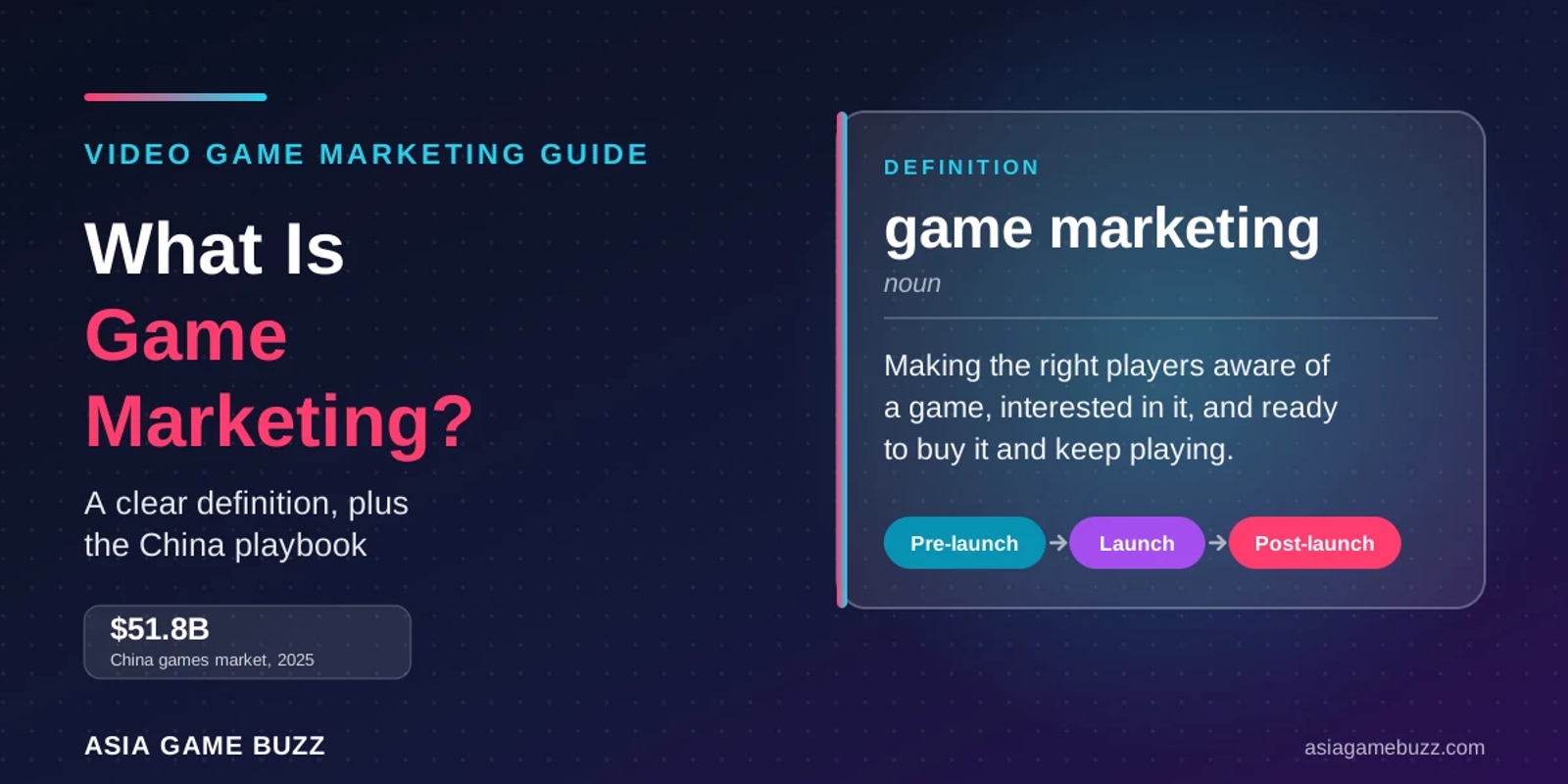
What is game marketing? Game marketing is the work of making players aware of a game, getting them interested and turning that interest into wishlists, downloads, sales and long-term players. It covers audience research, positioning, community, creators, PR, social media, paid ads and measurement, before, during and after launch.
Key takeaways
- Game marketing is wider than advertising. Ads are one paid tool inside a full plan.
- It runs in three stages: pre-launch, launch and post-launch.
- The main types are social media, creator, PR, search and content, paid ads, community and events.
- China needs its own approach: Chinese platforms, localized content and local compliance.
- Measure wishlists, sales, acquisition cost and retention, not only views.
What Is Game Marketing?
Definition
Game marketing, also called video game marketing or gaming marketing, is the set of activities that makes a game visible to the right players and persuades them to try it, buy it and keep playing. Video game marketers create campaigns before, during and after a game's release that aim to reach as many of the right gamers as possible. That includes choosing which media channels to use and working to keep the audience's reaction positive. For a closer look at the tactics, read how video games are marketed.
Why It Matters for Developers and Publishers Entering China
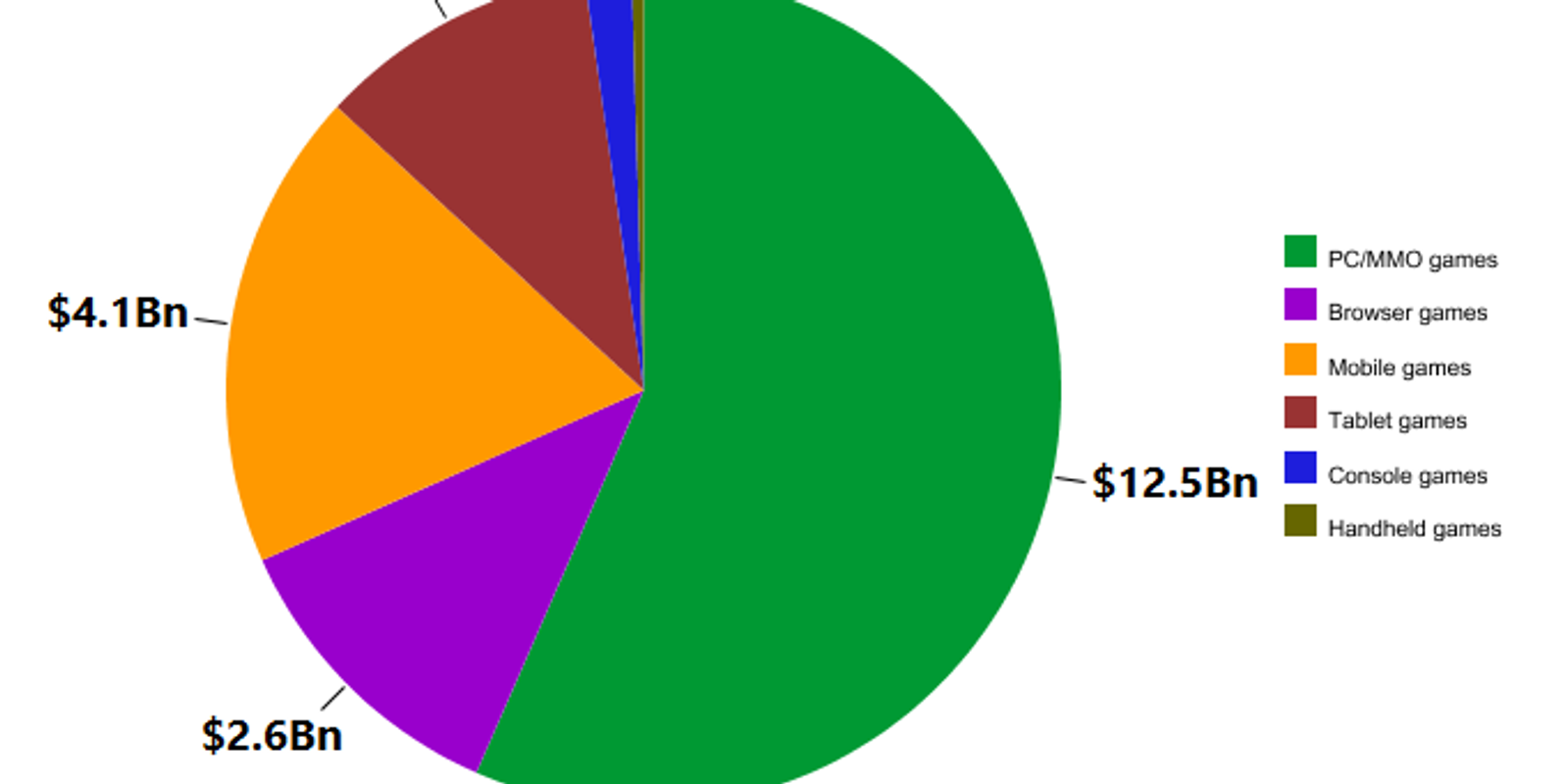
China is the world's largest games market. Niko Partners reports that revenue reached $51.8 billion in 2025 and forecasts $53.9 billion in 2026, with mobile still making up most of it and more than 700 million players. A great game does not find those players on its own. Chinese players discover games on different platforms than Western players do: short video apps such as Douyin and Kuaishou are the leading discovery channel, with 41% of players using them to find new games. Without local marketing, even a strong game stays invisible.
Main Goals
Game marketing has four main goals. First, awareness: getting your game in front of the right people. Second, interest and trust: wishlists, followers and community members. Third, conversion: downloads, purchases and in-app spending. Fourth, retention: keeping players active after launch, which matters because an online game that stops attracting players loses players over time.
How Does Game Marketing Work in China?
Understanding Chinese Players
Start with the audience. Chinese players differ from Western players in platform habits, genre preferences, spending and community behavior. Study comparable games on Steam and Chinese platforms, read Chinese reviews and note what players praise and criticize.
Positioning Your Game for the Chinese Market
Positioning is how you describe your game and what makes it different. Write a one-sentence pitch, pick two or three selling points and localize them into natural Simplified Chinese. Keep the message consistent across your store page, trailer and posts.
Choosing Channels and Tactics
Match channels to your game type and goals. A PC game might lean on Bilibili, creators and a QQ community. A mobile game might add Douyin ads and app-store promotion. Do two or three channels well rather than many badly. This is the core of any video game marketing strategy.
Measuring Campaign Performance
Set goals before you spend, tag every link, and review results weekly. Compare channels by wishlists, installs, sales and retention, then move budget toward what works.
Main Types of Game Marketing in China
Social Media (Douyin, Bilibili, Xiaohongshu, Weibo)
Social platforms create awareness and demand. Douyin rewards fast, hook-led clips, Bilibili rewards longer reviews and guides, Xiaohongshu suits visual and lifestyle-friendly content and Weibo helps build public momentum. Content must be native to each platform and written in Chinese.
KOL and KOC Marketing
KOLs (Key Opinion Leaders) bring reach and KOCs (Key Opinion Consumers) bring trust and authenticity. Creators matter even more in China because of how audiences behave. Some creator campaigns can be paid on performance, which ties cost to results.
Gaming PR and Media Coverage
PR earns coverage and credibility through press releases, interviews and announcements in Chinese gaming media. Prepare a press kit and localize your story for Chinese editors. Our game PR services in China handle outreach, and our guide to video game PR companies shows how to choose a partner.
Baidu SEO and Content Marketing
Chinese-language articles, guides and a localized landing page capture players who search on Baidu. Search is slower than social but keeps working long after a campaign ends.
Paid Advertising
Paid ads buy reach and speed. The main platforms are Ocean Engine for Douyin, Tencent Ads for WeChat and QQ, Bilibili and Baidu. Nativex says Ocean Engine is the most scaled channel across most of the titles it handles. Chinese advertising law bars false claims and superlatives such as best or number one, so review all creatives.
Community Management
A QQ group, WeChat channel or game-native community gives players a place to talk, give feedback and return. Daily moderation and regular updates keep it alive.
Events and Offline Activations
Events such as ChinaJoy in Shanghai, esports tournaments and local meetups add visibility and face-to-face trust. They work best as a supplement to online channels.
Three Stages of Game Marketing in China
Pre-Launch: Wishlists and Community
Build your store page, trailer and community early. For a Steam game, the Coming Soon page ideally goes live 6 to 12 months before launch, and wishlists are your main demand signal. Run devlogs, playtests and a demo.
Launch: Sales, Reviews and Coverage
Coordinate creators, press and community for launch week. Reviews and coverage in this window shape how players judge the game. Hold discounts until after launch, since an early price cut can signal trouble.
Post-Launch: Retention and Updates
Marketing does not end at release. Keep new players arriving and past players returning with updates, DLC, events and creator activations. A community with nothing new to do will drift to another game.
Game Marketing vs. Game Advertising in the Chinese Market
Key Differences
Marketing is the whole plan: research, positioning, community, PR, creators and measurement. Advertising is the paid part, where you buy placements to drive traffic. You can advertise without good marketing, but it rarely works.
How PR, Organic and Paid Work Together
PR and organic content build trust and give ads something credible to amplify. Paid ads then add speed and scale. Creators sit in between: seeded content can be boosted with paid spend. For free and low-cost tactics, see our game promotion ideas.
Choosing the Right Mix
Small teams should lean on community, creators and PR first, then add paid ads once they know what converts. Bigger launches combine all three from the start. Paid acquisition is also getting more expensive: Newzoo reports that global mobile cost per install rose 30% in the first half of 2026 while downloads fell 25%.
Game Marketing for Different Game Types in China
Indie and Steam Games
For PC and Steam, the goal is wishlists. Nearly 80% of premium PC players in China use Steam, mostly the international version without a VPN, so you can reach them without a separate Chinese release. Localize your store page and use Chinese creators, communities and a demo.
Mobile Games
Mobile game marketing in China works differently from the West. A strong mobile game marketing strategy usually combines Douyin and Tencent ads, Chinese creators, community and app-store promotion. Apple Search Ads can capture demand on iOS, while Android is split across many stores that typically charge higher commissions than Apple. Nativex advises starting with iOS because Android needs many stores and tracking setups. Mini-games are also large: about 80% of Chinese players have played them, and they account for nearly 20% of mobile game spending. Licensing matters for mobile releases, so check it before you plan spend.
Console Games
Console is a smaller and more tightly regulated segment in China, so partnerships and local publishers play a larger role. Confirm requirements with a qualified partner and market through creators, PR and community.
Multiplayer and Live-Service Games
Live-service games depend on retention. Many successful Chinese live-service games have become platforms where players create and share content, and about half of Chinese players engage with esports. Plan for continuous updates, creator programs and active communities.
What Makes a Game Marketing Strategy Succeed in China?
Clear Audience and Positioning
Successful campaigns know exactly who the game is for and say it clearly in Chinese.
Localized Trailers and Content
Use Chinese subtitles or voice-over, lead with gameplay and adapt tone and humor. Raw translation reads as low effort.
Community and Creator Partnerships
Creators and communities carry your message further than ads. Pick partners who truly cover your genre and brief them clearly.
Data-Driven Optimization
Track everything, test small and scale what works. Treat the first campaign as a test, not a final plan.
Do You Need a Game Marketing Agency in China?
Many foreign studios work with a game marketing agency in China because platforms, accounts, creators and compliance are easier to manage locally. Foreign entities generally follow similar platform rules to local ones, but often need an agency that can legally contract with them. A mobile game marketing agency should show experience with Ocean Engine, Tencent Ads, app stores and creator networks. A PC-focused agency should know Steam, Bilibili and community building. Ask for relevant case studies, clear reporting and a plan tied to your goals. Our guide to choosing a video game PR company lists what to look for and what to avoid.
How Much Does Game Marketing in China Cost?
Indie Budgets
There is no single number, because costs depend on genre, scope and how much you do yourself. A lean indie plan starts with localization, devlogs and community, then adds micro-creators, then PR and paid ads once results justify it. Ask for a scoped quote based on your goals.
Common Cost Items
Typical items include localization, creative production, creator fees, community management, PR and media outreach, paid media, events, tracking tools and agency fees.
Organic vs. Paid
Organic work costs time and builds trust. Paid media buys speed but needs testing. Nativex notes that testing in China is cheaper than many studios assume, and that generic cost benchmarks vary widely, so work from current figures supplied by a local partner.
How to Measure Game Marketing Success in China
Reach and Engagement
Track impressions, views, followers and community activity. These are early signals, not goals.
Wishlists and Sales
Use tracked links and promo codes for each creator and channel. Compare wishlist growth by country in Steamworks, then compare wishlists to launch sales.
Acquisition Cost and ROAS
Divide spend by wishlists, installs or purchases to get acquisition cost, and divide revenue by ad spend to get return on ad spend (ROAS).
Retention
Track how many players return after day one, week one and month one. Retention shows whether marketing brought the right players.
FAQ About Game Marketing in China
What is game marketing? Game marketing is the work of building awareness of a game, interest in it and demand for it, through research, positioning, community, creators, PR, social media and ads, before, during and after launch.
How does game marketing work in China? It works through Chinese platforms and local partners: short video on Douyin and Bilibili, KOL and KOC creators, Chinese gaming media, QQ and WeChat communities, Baidu search and paid ads, all in Simplified Chinese.
Why is game marketing important for China entry? Because Chinese players find games on different platforms and in a different language. Without local marketing, even a strong game stays unseen in a market of more than 700 million players.
What are the main strategies for marketing games in China? Social media seeding, KOL and KOC campaigns, gaming PR, Baidu content, paid ads, community management and events, combined in a plan built around your game type and budget.
How do you become a game marketer in China? Build skills in writing, data analysis and social platforms, learn how Chinese platforms like Douyin, Bilibili and Xiaohongshu work, and gather portfolio work such as campaigns or community projects. A degree helps but is not required. Common roles include copywriter, influencer marketer, digital marketer, brand manager and product marketer. Chinese language skills are a strong advantage.
What is a video game marketing strategy? It is a plan that defines your audience, positioning, channels, budget and goals, and sets how you will measure results at each stage of launch.
Conclusion: Why Game Marketing Is Essential for Success
Game marketing is how a good game finds its players. It covers more than ads: research, positioning, community, creators, PR and measurement across the whole life of the game. In China, it also means local platforms, localized content and compliance. Start early, test small and scale what works.
If you are entering China, talk to Asia Game Buzz, a game marketing agency in China, about a localized plan for your game, and browse more guides in our Insights library.