
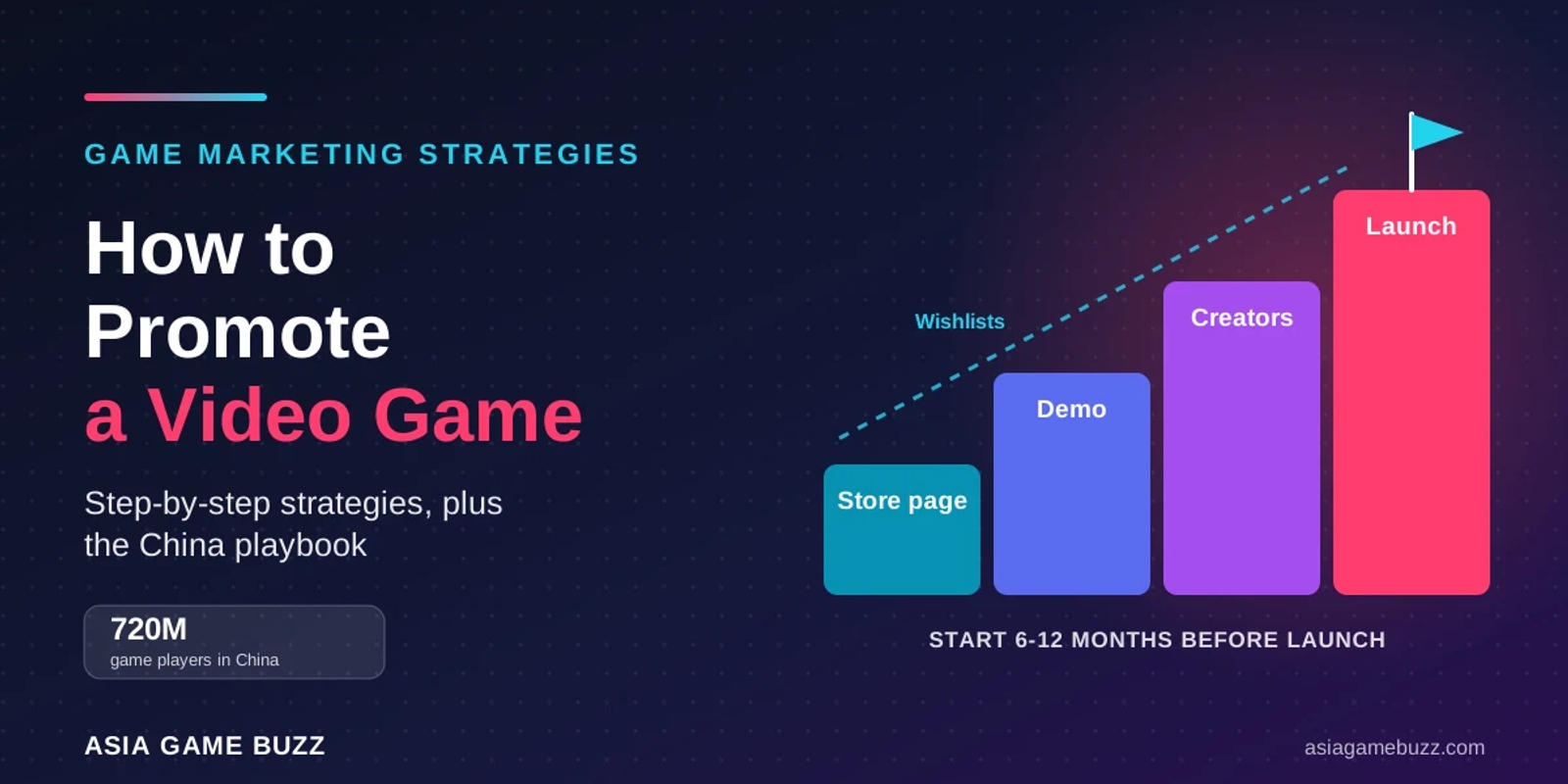
How do you promote a video game? Start before the game is finished. Put up a store page, define who the game is for, show real gameplay in short videos, build a community, send keys to creators who cover your genre and keep a press kit ready. Use a demo and Steam Next Fest to turn interest into wishlists, then launch with a coordinated creator and press wave. To reach China, do all of this in Simplified Chinese on Chinese platforms such as Bilibili, Douyin, Xiaohongshu, QQ and WeChat.
Key takeaways
- Promotion should start months before launch, ideally when you can first show the game.
- For a Steam game, almost every step feeds one number: wishlists.
- Gameplay video, creators and community do most of the work for indie budgets.
- Chinese players discover games on Chinese platforms, so Western channels alone will not reach them.
- Track every link, creator and channel so you can double down on what converts.
Marketing a video game is not something you can leave until the game is done. Hundreds of games launch every day, and those that do not promote themselves well get lost in the crowd. This guide covers the video game marketing strategies that work for indie developers and publishers, then shows how to apply them to China, the world's largest player market. If you want the general overview first, read our guide on how to market a video game or see how video games are marketed.
Why Promote Your Game in China?
Size of the Chinese Steam Audience
China has about 720 million players. On Steam, Simplified Chinese was the most-used language in 2024, at 33.7% against 33.5% for English, according to Valve's GDC 2025 figures. Monthly survey numbers swing sharply because of sampling, from about 50% in February 2025 to about 22% in October 2026, so do not rely on any single month. The direction is still clear: Chinese players are one of the largest groups on the platform. Valve also reports that two-thirds of players view Steam in a language other than English. For the wider market picture, see our China video game industry overview.
Why Western Promotion Doesn't Reach Chinese Players
YouTube, Twitch, Reddit and Discord are not where most Chinese players discover games. Discovery runs through Bilibili, Douyin, Xiaohongshu, Weibo, QQ and WeChat, and short video has become a main route to finding new games. Nearly 80% of premium PC players use Steam, mostly the international version without a VPN, so you can reach them without a Chinese release license, but only if you speak to them on their own platforms and in their own language. Our breakdown of how Chinese PC gamers differ from Western players shows what that means for genre, price and tone.
When to Start Promoting
The biggest marketing decision is the game you choose to make, and promotion starts the day you can show it. Most guidance puts the Steam Coming Soon page 6 to 12 months before launch, and Valve requires it to be public at least two weeks before release. Wishlists do not go stale: Chris Zukowski's case studies show early wishlists convert about as well as late ones, unless the game changes style or genre dramatically. Use our video game marketing roadmap to plan the phases. If you also plan a mobile or console release in China, check licensing early, and follow China gaming regulation news for policy changes.
How to Build a China Game Promotion Strategy
Define Your Chinese Target Audience
Study comparable games on Steam and see who reviews them in Chinese, which tags they use and how they are priced. Decide which player group you are targeting: genre fans, casual players or a particular community. Indie developers do not need a granular profile, but they do need to know their closest comparable games.
Position Your Game for Chinese Players
Write a one-sentence pitch that makes the game sound appealing, then localize it. An elevator pitch helps you find your strongest selling points and weed out weak ones. Decide which two or three features to lead with in Chinese, such as art style, a unique mechanic or an emotional hook, and keep them consistent across your store page, trailers and posts.
Set Goals and Budget
Set goals in wishlists, community members and creator coverage, not vague awareness. Decide what you can spend on localization, creators, PR and ads, and which tasks you can do yourself.
Choose Chinese Channels
Pick two or three channels and do them well rather than spreading thin. A good starting mix is Bilibili for trust, Douyin for reach and a QQ or WeChat group for community. Our guide to marketing PC games in China compares the options.
Step-by-Step Ways to Promote Your Game in China
Localize Your Steam Page
Translate the short description, feature list, capsule text, screenshots and trailer captions into natural Simplified Chinese. Do not use raw machine translation. See our guide to marketing a game on Steam for the full store-page checklist.
Seed Content on Bilibili, Douyin and Xiaohongshu
Post short gameplay clips, devlogs and behind-the-scenes content natively on each platform, with Chinese captions. Bilibili rewards longer, informative videos, Douyin rewards fast hooks and Xiaohongshu rewards visual, lifestyle-friendly posts. A team that handles social media marketing for games in China can keep this consistent.
Work With Chinese KOLs and KOCs
Creators build trust that ads cannot. Match each creator to your genre, check real engagement and audience, and give them a clear brief. Read how to choose the right Chinese game KOL, or hire a team that runs KOL and influencer marketing for games end to end.
Build QQ and WeChat Communities
Open a QQ group or WeChat channel early, post updates in Chinese, run playtests and answer questions daily. Gaming community apps such as Heybox, the main gaming social platform in China, are also worth understanding. If you cannot staff a community yourself, use a community management service for games.
Reach Chinese Gaming Media
Prepare a press kit with a game description, release details, promotional images, any embargo information and contact details, and make journalists' work easy. Localize your press release for Chinese editors rather than translating an English one. Our game PR services in China handle outreach and distribution.
Create Chinese Trailers and Gameplay Videos
Lead with gameplay in the first seconds, add Chinese subtitles and cut short versions for vertical video. Keep your trailer and screenshots up to date, so creators and media never feature outdated material.
Join Chinese Gaming Events and Festivals
Use Steam festivals to gather wishlists from Chinese players, and look at Chinese events such as ChinaJoy in Shanghai for meetings and visibility. Livestreams are another route: see how to boost wishlists through Huya and Douyu streaming.
How to Promote an Indie Game on Steam in China
Optimize Chinese Store Page and Tags
Use every relevant tag, since a thin tag list limits who Steam shows your game to. Make sure capsule art reads clearly at small sizes and that your Chinese short description explains the game in a sentence or two.
Build Wishlists Before Launch
Publish your Coming Soon page as soon as you can show the game. Everyone who wishlists is notified when you launch and when you run a real discount, so wishlists are the foundation of your launch.
Use Demos and Next Fest
Steam Next Fest is a one-week event of free demos, and each game can enter only once. The demo must be playable by the first day and sent for review at least three weeks beforehand. Release your demo well before the fest: games that did so earned roughly 2.5 times more wishlists from the event. Many fest wishlists come from people who never download the demo, so your capsule, screenshots and Chinese description matter as much as gameplay.
Earn Genuine Chinese Reviews
Send keys to creators who cover your genre, encourage honest reviews and respond to feedback in Chinese. Do not pay for or fake reviews. Real reviews shape how Chinese players judge your game.
Plan Launch-Week Promotion
Coordinate a creator wave, press coverage and community activity for launch week, and be ready to patch quickly. Hold discounts until after launch: cutting the price before release can signal trouble. Keep promoting with updates and DLC afterwards. For more PC-specific tactics, see how to market a PC game.
How to Promote a Game in China for Free
Share Devlogs in Chinese
Short, regular devlogs on Bilibili, Xiaohongshu and your community group cost only time. Show progress, not only finished assets.
Participate in Chinese Gaming Communities
Join relevant groups and forums, answer questions and add value before promoting. Spam gets you banned and damages trust.
Reach Out to Small Creators
Small creators often respond to personal messages with a key and a short clip. Choose ones who actually cover your genre.
Use Baidu and Chinese Content SEO
Publish Chinese-language guides and a localized landing page so players searching on Baidu can find your game. For more no-cost tactics, see our game promotion ideas.
How Much Does Promoting a Game in China Cost?
Indie Budget Ranges
There is no single figure, because costs depend on genre, scope and how much you do yourself. Plan in stages instead. Stage one is low cost: localization, devlogs and community. Stage two adds micro-creators and keys. Stage three adds PR and paid ads once you know what converts. Ask a local agency for a scoped quote based on your goals.
Organic vs. Paid
Organic promotion costs time and builds trust. Paid promotion buys speed and scale, but it is getting more expensive: Newzoo reports that global mobile cost per install rose 30% in the first half of 2026 while downloads fell 25%. Test small before scaling. Read our guide to how to advertise a video game for the paid side.
Budget Allocation by Channel
Put money into community and creators first, PR second and paid ads last. If you want expert help, see how an indie game marketing agency can stretch a small budget.
How to Measure Game Promotion Results in China
Traffic, Engagement and Wishlists
Track store-page visits, wishlist growth by country in Steamworks, follower growth and community activity.
Sales and Retention
Compare wishlists to launch sales, then watch refunds, reviews and returning players.
KOL Campaign Evaluation
Give each creator a tracked link or promo code and compare views, clicks, wishlists and sales. Some creators can be paid on performance, which ties cost to results.
Common Mistakes When Promoting Games in China
Starting Too Late
Marketing a month before launch rarely works. Communities and creator relationships take months to build.
Treating China as One Audience
Chinese players differ by platform, region, age and genre taste. Pick a segment and speak to it.
Skipping Community Building
Without a community there is nobody to talk about your game on launch day.
Spending Without Tracking
If you cannot tell which channel produced a wishlist, you cannot improve. Follow the steps in our guide on how to start promoting PC games in China, including performance tracking.
FAQ About Promoting Games in China
How do you promote a game in China? Localize your Steam page in Simplified Chinese, post gameplay content on Bilibili, Douyin and Xiaohongshu, work with Chinese KOLs and KOCs, build a QQ or WeChat community and reach Chinese gaming media.
How can indie developers promote games to Chinese players? Start with a localized Steam page, a demo, devlogs and micro-creators. Build a small community early and use Steam festivals to gather wishlists.
How do you promote a game in China without a budget? Share devlogs in Chinese, take part in Chinese communities, message small creators with keys and publish Chinese content that Baidu can index. It costs time rather than money.
What is the best promotion strategy for a Steam game in China? Build wishlists before launch with a localized store page, a demo, creator seeding and a community, then launch with a coordinated creator and press wave.
How early should you start promoting before launch? Ideally 6 to 12 months before launch, when you can first show the game publicly. Valve requires your store page to be public at least two weeks before release.
What is the difference between promoting and marketing a game? Promotion is the set of activities that spread the word, such as content, creators, PR and events. Marketing is the wider plan, including audience research, positioning, pricing and measurement.
Conclusion: Create a Promotion Plan That Grows With Your Game
The best way to promote a video game is to start early, know your audience, show real gameplay and build a community that wants to talk about it. In China, success also depends on Chinese platforms, localized content and trusted creators. For the full picture, read our complete guide to promoting your game.
If you are planning a China launch, talk to Asia Game Buzz about KOL and influencer marketing, community management and game PR in one localized plan.